If you walk into any high level gym in 2026, the conversation has shifted. Ten years ago, everyone whispered about Clenbuterol or T3 for getting shredded. Today, the entire industry is talking about GLP-1 agonists.
You know them by their brand names like Ozempic, Wegovy, or Mounjaro, but in the underground world of physique enhancement, they are simply known as “Sema” and “Tirz.” These peptides have completely changed the landscape of contest prep and fat loss phases.
The results are undeniable. People are getting leaner, faster, and with less suffering than ever before. But there is a dark cloud hanging over this trend. The internet is flooded with horror stories about “Ozempic face” and rapid muscle wasting. For a bodybuilder, the idea of losing hard earned tissue is a nightmare.
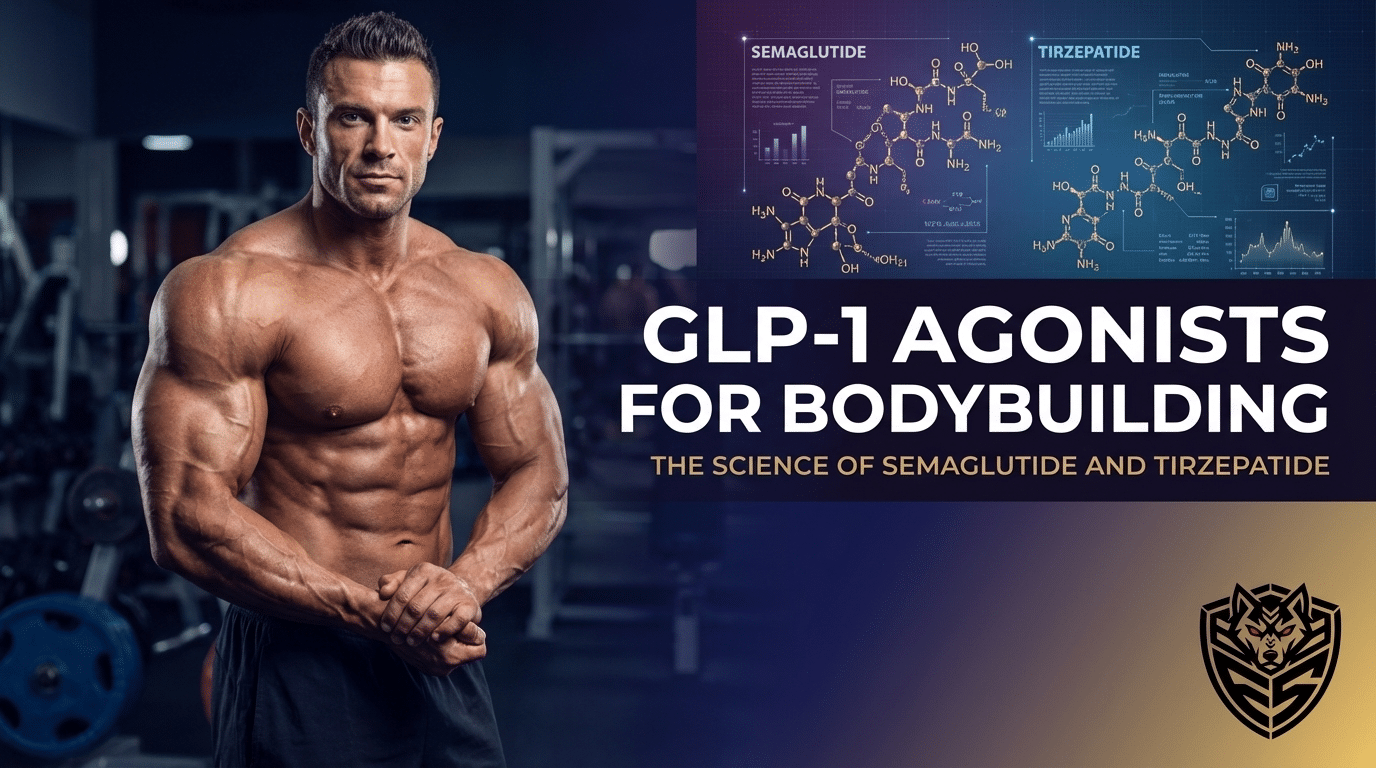
This guide explores the actual science of how GLP-1 agonists interact with a bodybuilder’s physiology. We will look at whether they are catabolic, the difference between Semaglutide and Tirzepatide, and the specific protocols athletes are using to get peeled without sacrificing their gains.
The Mechanism: How GLP-1s Actually Work

To understand how to use these drugs correctly, you have to understand what they do to your hormones. GLP-1 stands for Glucagon Like Peptide 1. It is a hormone your gut naturally produces after you eat.
When you inject a synthetic GLP-1 agonist like Semaglutide, you are effectively hacking this system. The drug binds to GLP-1 receptors in the pancreas and the brain, triggering a cascade of effects that make dieting feel effortless.
1. The Brain Gut Connection
The primary mechanism is neurological. These peptides cross the blood brain barrier and hit the hypothalamus, the part of the brain that controls hunger. They physically turn down the volume on “food noise.” If you have ever been deep in a contest prep, staring at the ceiling at 3 AM thinking about donuts, you know how powerful that noise can be. GLP-1s silence it. You simply forget to eat.
2. Delayed Gastric Emptying
This is the physical side of the equation. These drugs slow down the speed at which food leaves your stomach. Instead of digesting a meal in two hours, it might take four or six. This physical fullness sends a constant “I am satisfied” signal to your brain.
3. Insulin Sensitivity
This is the underrated benefit for bodybuilders. GLP-1 agonists enhance glucose dependent insulin secretion. This means when you do eat carbs, your body handles them better. Improved insulin sensitivity is the holy grail of nutrient partitioning, meaning your food is more likely to be used for energy and repair rather than being stored as fat.
The Muscle Loss Myth: Are GLP-1s Catabolic?
If you search for “Semaglutide muscle loss,” you will find clinical trials stating that up to 40% of the weight lost on these drugs was lean mass. That statistic is terrifying. However, context is everything.
Why Clinical Trials Show Muscle Loss
The participants in the big pharma studies were not bodybuilders. They were obese individuals who were not lifting weights and were not prioritizing protein. When you crush someone’s appetite to zero and they stop eating, they will lose weight from everywhere. If they are not providing a stimulus (lifting) or building blocks (protein) to the muscle, the body will cannibalize muscle tissue for energy.
The Bodybuilder Reality
For a dedicated athlete, the drug itself is not catabolic. It does not directly dissolve muscle tissue. The risk comes from undereating.
If you take a high dose of Semaglutide and only manage to eat 80 grams of protein a day because you are too nauseous to look at chicken breast, you will lose muscle. That is not the drug’s fault. That is a nutritional failure.
If you maintain high protein intake (1 gram per pound of body weight minimum) and continue training with heavy loads, the data suggests you can retain nearly all your lean mass while stripping off fat. In fact, the improved insulin sensitivity might actually help protect your gains during a cut.
Semaglutide vs. Tirzepatide: Which is Better?
This is the most common question in 2025. While Semaglutide (Ozempic/Wegovy) was the first wave, Tirzepatide (Mounjaro) is widely considered the superior compound for athletes.
Semaglutide (The GLP-1 Agonist)
Semaglutide targets just one receptor: GLP-1. It is potent, effective, and widely available. However, it comes with a higher rate of side effects, specifically nausea and lethargy. Many bodybuilders report feeling “flat” or tired in the gym on Semaglutide, which can kill workout intensity.
Tirzepatide (The Dual Agonist)
Tirzepatide is a GIP / GLP-1 dual agonist. It mimics two hormones instead of one. GIP (Gastric Inhibitory Polypeptide) works synergistically with GLP-1 to lower blood sugar and suppress appetite, but it seems to blunt the nausea side effects.
For bodybuilders, Tirzepatide is the gold standard because:
- Less Nausea: You can actually eat your required protein meals.
- Less Fatigue: It tends to have a lower impact on energy levels, allowing for better training sessions.
- Potency: Clinical head to head trials show Tirzepatide produces significantly more weight loss than Semaglutide.
Protocols for Physique Athletes
Bodybuilders do not use these drugs the same way a diabetic patient does. The goal is not “maximum weight loss at all costs.” The goal is “strategic appetite management.”
The Micro Dosing Strategy
Smart athletes are using what is called a “titration” approach. They do not jump to the maximum dose. They find the minimum effective dose that takes the edge off their hunger without killing their appetite completely.
- Semaglutide Strategy: A therapeutic dose might go up to 2.4 mg per week. Bodybuilders often stay in the 0.25 mg to 0.5 mg range. This is enough to stop the binge urges but low enough that they can still force down their pre-workout meal.
- Tirzepatide Strategy: While the max dose is 15 mg, many athletes see incredible results at just 2.5 mg or 5 mg per week.
The Protein Requirement
This is non negotiable. On GLP-1s, your digestion is slower. You physically cannot eat massive volume. This means every bite must be dense with nutrients. The “bro diet” of tilapia and asparagus works well here because it is low volume. Shakes and liquid nutrition become critical tools to hit protein targets when you don’t feel like chewing.
Cycle Duration
Unlike steroids, GLP-1s don’t necessarily require a “PCT” (Post Cycle Therapy), but you cannot stay on them forever. The body adapts. Most cutting phases last 12 to 16 weeks. Using the drug for the last 8 weeks of a prep, when hunger is at its worst, is a common strategy to land the plane without cheating on the diet.
Side Effects and Risks
There is no free lunch in biology. These powerful drugs come with real risks that every user must acknowledge.
Gastrointestinal Distress
This is the most common issue. Nausea, vomiting, diarrhea, and severe constipation are prevalent. Because gastric emptying is slowed, food sits in your gut longer. If you eat a high fat “cheat meal” while on these peptides, you will likely regret it. The food can sit there for hours, fermenting and causing sulfur burps and vomiting.
Hypoglycemia (Low Blood Sugar)
This is a critical warning for enhanced bodybuilders using insulin. GLP-1s lower blood sugar. If you are also injecting exogenous insulin, the risk of going hypo is magnified. You must monitor your blood glucose levels religiously if you are stacking these compounds.
Thyroid Tumors
The FDA “Black Box” warning on these drugs relates to thyroid C-cell tumors found in rodents. While this has not been conclusively replicated in humans, anyone with a family history of Medullary Thyroid Carcinoma (MTC) or Multiple Endocrine Neoplasia syndrome type 2 (MEN 2) must strictly avoid GLP-1 agonists.
“Ozempic Face”
This viral term simply refers to rapid fat loss in the face, which can make you look gaunt and older. It is not a side effect of the drug itself, but a side effect of losing fat too quickly. Bodybuilders call this “death face,” and on stage, it is actually desired. In the off season, maybe not so much.
Conclusion: The Verdict for Bodybuilding
Are GLP-1 agonists “cheating”? In a sport where diuretics and anabolic agents are standard, the ethical line is blurry. From a physiological standpoint, Semaglutide and Tirzepatide are arguably the most effective tools for fat loss we have ever seen.
They solve the hardest part of bodybuilding, which is the hunger. They allow athletes to adhere to strict caloric deficits with a level of consistency that was previously impossible.
However, they require respect. If you use them to starve yourself, you will look like a deflated balloon. If you use them as a tool to execute a high protein, scientifically calculated cutting phase, they can help you achieve a level of conditioning that is truly freakish.
As with BPC 157 or any other research compound, the key is education. Understand the mechanism, respect the dosage, and prioritize your protein, or you will lose the muscle you worked so hard to build.
Scientific References
- Wilding JPH, et al. (2021). Once-Weekly Semaglutide in Adults with Overweight or Obesity. The New England Journal of Medicine, 384, 989-1002. The landmark STEP 1 trial establishing the efficacy of Semaglutide for weight loss.
- Jastreboff AM, et al. (2022). Tirzepatide Once Weekly for the Treatment of Obesity. The New England Journal of Medicine, 387, 205-216. The SURMOUNT-1 trial demonstrating Tirzepatide’s superior weight loss profile compared to placebo.
- McCrimmon RJ. (2020). Glucose sensing in the brain and the regulation of appetite. Diabetologia, 63, 1669-1678. Explains the neurological mechanism of how glucose and GLP-1 signaling impacts hunger in the hypothalamus.
- Willard FS, et al. (2020). Tirzepatide is an imbalanced and biased dual GIP and GLP-1 receptor agonist. JCI Insight, 5(17), e140532. A deep dive into the molecular difference between single and dual agonists.
- Sargeant JA, et al. (2019). Mechanisms of Muscle Atrophy in Obesity during Weight Loss. International Journal of Molecular Sciences, 20(19), 4887. Discusses the catabolic pathways activated during rapid weight loss and how protein intake mitigates them.
- Drucker DJ. (2018). Mechanisms of Action and Therapeutic Application of Glucagon-like Peptide-1. Cell Metabolism, 27(4), 740-756. Comprehensive review of GLP-1 biology.
- Frías JP, et al. (2021). Tirzepatide versus Semaglutide Once Weekly in Patients with Type 2 Diabetes. The New England Journal of Medicine, 385, 503-515. Head-to-head comparison proving Tirzepatide’s superior potency.
- Smits MM, Van Raalte DH. (2021). Safety of Semaglutide. Frontiers in Endocrinology, 12, 645563. Safety profile analysis including gastrointestinal and thyroid risks.
- Volpe S. (2023). Nutrient Timing and Metabolic Regulation. Journal of Strength and Conditioning Research. Contextualizes insulin sensitivity and nutrient partitioning for athletes.
- Heppner KM, et al. (2010). The role of GLP-1 in the central regulation of food intake and body weight. Physiology & Behavior, 100(5), 545-548. Early research establishing the brain-gut axis role of these peptides.