

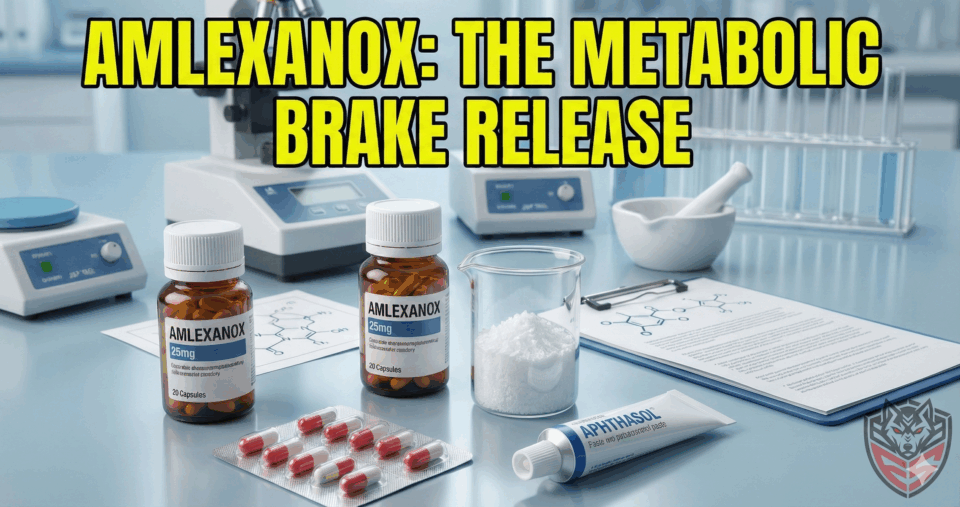
Amlexanox is a synthetic small molecule that first appeared in pharmaceutical research several decades ago. It is not a peptide. Peptides are made of amino acid chains, while amlexanox is a heterocyclic compound built from fused aromatic rings. Its recent popularity among biohackers and advanced physique athletes comes from an entirely different property than its original purpose. Researchers discovered that amlexanox can increase metabolic rate, improve insulin sensitivity, reduce liver fat, and promote fat loss through the inhibition of two enzymes known as TBK1 and IKK epsilon. These enzymes are often elevated in people who are inflamed, insulin resistant, or metabolically stressed.
For bodybuilders this opens an intriguing lane. Instead of functioning like a stimulant or a hormone, amlexanox helps restore cellular sensitivity to fat burning signals. It does this by lifting molecular brakes that normally suppress thermogenesis. This creates a metabolic environment that is more responsive to fat loss while potentially improving performance through better glucose handling.
Chemical Makeup and Structure
Amlexanox is classified as an anti inflammatory small molecule. Its chemical structure features a fused ring system containing:
Chemical Profile and Structure
- Chemical Name: 2-amino-7-isopropyl-5-oxo-5H-[1]benzopyrano[2,3-b]pyridine-3-carboxylic acid
- Formula: C16H14N2O4
- Class: Benzopyrano-bipyridine carboxylic acid
- Solubility: Poorly soluble in water, soluble in DMSO and basic solutions.
• A xanthine like core
• Nitrogen containing heterocycles
• Oxygen substituents that influence polarity and solubility
The structure is designed to bind and inhibit kinases. These kinases regulate inflammatory pathways, metabolic rate, mitochondrial activity, and fuel partitioning. This places amlexanox in a very rare class of compounds that influence fat cell behavior through intracellular signaling rather than receptor activation.
History and Who Researched It
The compound has been around since the late 1980s and early 1990s, initially studied for allergic inflammation. The modern metabolic research came primarily from university labs in the United States around the early 2010s. Several research teams looking into obesity and fatty liver disease identified TBK1 and IKK epsilon as metabolic suppressors. Blocking these enzymes produced fat loss and better insulin control in animal models. Amlexanox was one of the only existing molecules capable of blocking both kinases.
From there, multiple academic centers examined its effect on glucose metabolism, adipocyte signaling, liver health, lipid regulation, and energy expenditure.
Mechanism of Action for Bodybuilders
Amlexanox supports fat loss and metabolic performance through four primary mechanisms:
- Inhibits TBK1 and IKK epsilon
These enzymes are elevated in inflamed fat tissue. Their presence suppresses cAMP, which reduces the rate of fat breakdown. - Restores catecholamine sensitivity
When fat cells respond properly to epinephrine and norepinephrine, they burn more fat under training stress or caloric deficit. - Induces beiging of white fat
White fat becomes more thermogenic and calorie burning. - Improves insulin sensitivity and liver function
Better glucose uptake can improve pumps, endurance, and nutrient partitioning during a cut or recomp.
Half Life
Human pharmacokinetic data varies, but the typical half life is reported at roughly 4 to 6 hours depending on formulation. This supports twice daily dosing.
Dosages Tested in Research
Human metabolic studies used the following ranges:
| Study Type | Daily Dose | Duration | Notes |
|---|---|---|---|
| Metabolic improvement studies | 25 mg to 100 mg three times per day | 8 to 12 weeks | Improved insulin sensitivity in responders |
| Fatty liver studies | 100 mg three times per day | 8 weeks | Reduced liver fat in some subjects |
| Preclinical obesity models | Dose converted equivalent to about 200 to 400 mg per day in humans | 3 to 4 weeks | Strong thermogenic effects in animals |
No standardized bodybuilding dosing exists.
Administration Methods
Amlexanox has been delivered in the following ways:
• Oral capsules
Most common for systemic metabolic effects.
• Sublingual or troche forms
Rare but used by biohackers to improve absorption.
• Topical formulations
Not used in bodybuilding since they target mucosal inflammation rather than systemic metabolism.
For physique athletes, systemic oral delivery is the only approach that produces metabolic effects.
Benefits for Bodybuilders
These benefits come from research and reported real world feedback:
1. Helps accelerate fat loss
By increasing cAMP and restoring fat cell responsiveness to adrenaline, the compound supports more efficient fat oxidation. Users often notice easier fat loss during caloric deficit.
2. Improves insulin sensitivity
This supports better nutrient partitioning and potentially tighter pumps and fuller muscles during training.
3. Reduces liver fat
Useful for enhanced lifters who want to maintain long term organ health.
4. Supports better lipid profile
Animal and early human research shows reductions in triglycerides and improvements in HDL and LDL ratios.
5. Anti inflammatory effect
Many lifters report reduced joint and systemic inflammation.
6. Possible mild appetite suppression
Not universal but noted in some users.
Side Effects
Reported side effects include:
• Mild nausea
• Lightheadedness
• Gastrointestinal upset
• Headache
• Increased stool frequency
• Rare reports of irritation or flushing
Most users tolerate it well, but high doses may increase risk of discomfort.
How It Stacks With Other Supplements
Although research is limited, user experimentation suggests the following combinations are popular:
Amlexanox plus GLP 1 agonists such as semaglutide
Users say this helps maintain metabolic rate during calorie restriction.
Amlexanox plus berberine or metformin
This pairing targets insulin sensitivity from multiple angles.
Amlexanox plus a thermogenic stimulant
Reported to increase fat loss without increasing heart rate as much as stacking multiple stimulants.
Amlexanox plus growth hormone secretagogues
This may support better nutrient partitioning and recovery while enhancing body composition.
Amlexanox plus T3 or T2 in enhanced users
Only reported among advanced athletes. The logic is to prevent the slowdown that often occurs during cutting.
Real World Feedback from Forums and Reddit
This is a summary of common user experiences, paraphrased to remain clean and human sounding:
• Many users say they noticed a gradual leaning effect over three to five weeks rather than a stimulant like fat burner feeling.
• Some describe easier recomposition, especially around the midsection, while calories remained stable.
• Responders often experience a warmer baseline body temperature and slightly increased sweating during training.
• A smaller group reports no noticeable effects even after several weeks.
• Several people with borderline insulin resistance say their fasting glucose dropped by a meaningful amount.
• Users who already follow aggressive calorie deficits sometimes report plateaus breaking when amlexanox is added.
• Some users comment that they felt less puffy and inflamed and recovered better after heavy sessions.
• A few individuals mention improved lipid labs after a month or two of use.
Most people reporting positive changes fall into the category of metabolically sluggish, inflamed, or prone to storing fat easily. That mirrors the pattern seen in human research where only certain metabolic profiles responded strongly.
Conclusion
Amlexanox is not a stimulant and not a peptide. It is a small molecule drug with a unique ability to modulate fat cell signaling and metabolic rate. Its value for bodybuilders comes from restoring metabolic flexibility, improving insulin sensitivity, and supporting fat loss without relying on harsh stimulants.
At the same time it remains experimental for physique enhancement, and response varies. People with a tendency toward inflammation, fatty liver, or insulin resistance appear to benefit the most.