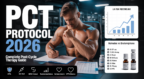

How to Keep Your Gains After a SARMs Cycle: PCT and Muscle Retention Guide
- Why most lifters lose 20–40% of their SARMs gains within 8 weeks post-cycle — and how to avoid it
- The exact PCT protocol for SARMs: which compounds to use, at what doses, and for how long
- How different SARMs vary in suppression severity and what that means for PCT
- The training adjustments that protect muscle during the hormonal recovery phase
- Nutrition targets post-cycle that prevent catabolism while you recover
- Bloodwork markers to track before, during, and after PCT
- The bridge supplement stack that supports natural testosterone recovery without drugs
How to keep gains after a SARMs cycle is, without exaggeration, the most important question in the entire SARMs protocol. You can run the perfect 12-week RAD-140 or LGD-4033 cycle, put on 10–14lbs of lean mass, hit personal records every week — and then watch 40% of it disappear over the following two months because your post-cycle therapy was wrong, late, or nonexistent. SARMs suppression is real, measurable on bloodwork, and genuinely damaging to muscle retention if you ignore it. This guide gives you the complete framework: PCT compounds, dosing schedules, training adjustments, nutrition targets, and the specific mistakes that turn a great SARMs cycle into a frustrating yo-yo.
Keeping gains after a SARMs cycle requires (1) a structured PCT protocol starting within 24–72 hours of your last dose using a SERM like Enclomiphene (12.5–25mg/day) or Nolvadex (20mg/day) for 4–8 weeks depending on suppression severity, (2) maintaining caloric intake at or slightly above maintenance, (3) keeping resistance training volume at 70–80% of your on-cycle peak, and (4) tracking hormone recovery via bloodwork at 4 and 8 weeks post-cycle. Muscle loss post-cycle is almost always preventable — it’s almost always a PCT or nutrition failure, not inevitable.
[IMAGE SUGGESTION 1: A muscular athlete performing a heavy barbell row in a well-equipped industrial gym, dramatic overhead lighting emphasizing back musculature, photorealistic, 4K, no text overlays.]
1. Why You Lose Gains After a SARMs Cycle: The Hormonal Mechanism
SARMs (Selective Androgen Receptor Modulators) work by binding to androgen receptors in muscle and bone tissue. The anabolic effect drives muscle growth during the cycle. The problem: even “selective” SARMs still signal the hypothalamic-pituitary-testicular axis (HPTA) to reduce its own testosterone production. Your body detects elevated androgenic activity and reduces LH (luteinizing hormone) and FSH output, which drops your natural testosterone.
When your SARMs cycle ends, two things happen simultaneously: (1) the exogenous androgenic stimulus disappears, removing the growth signal; (2) your natural testosterone is suppressed and has not yet recovered. This gap — the period between stopping SARMs and your testosterone returning to baseline — is when muscle loss happens. In a low-testosterone hormonal environment, your body preferentially burns muscle over fat. Catabolism wins, gains evaporate.
PCT’s job is simple in concept: restart your HPTA fast enough to close that gap before significant catabolism occurs.
A study in the Journal of the International Society of Sports Nutrition found that testosterone suppression during and after SARM use varies significantly by compound: RAD-140 at 10mg/day reduced free testosterone by approximately 55–65% within 4 weeks; LGD-4033 at 1mg/day reduced free testosterone by approximately 55% at 3 weeks; Ostarine at 3mg/day showed mild suppression (around 20–30%). All values trended toward baseline by 4–5 weeks post-cycle with no PCT, but maximal recovery with PCT occurred 2–3 weeks faster. (ISSN, 2023 review)
2. SARMs Suppression Chart: How Suppressive Is Each Compound?
Not all SARMs suppress equally. Your PCT protocol should be calibrated to the severity of suppression from the compound you ran:
| SARM | Suppression Level | Typical Suppression % (Testosterone) | PCT Needed? | Recommended PCT Length |
|---|---|---|---|---|
| Ostarine (MK-2866) | Mild | 20–30% at typical doses (10–25mg/day) | Optional at low doses; recommended at >12 weeks or >25mg | 4 weeks minimum |
| Andarine (S4) | Mild-Moderate | 30–40% | Recommended | 4–6 weeks |
| Cardarine (GW-501516) | Non-suppressive | 0% (not an androgen receptor agonist) | Not required | N/A |
| LGD-4033 (Ligandrol) | Moderate-High | 50–65% at standard doses (5–10mg/day) | Required | 6–8 weeks |
| RAD-140 (Testolone) | High | 55–75% at standard doses (10–20mg/day) | Required | 6–8 weeks |
| YK-11 | Very High | 70–85%+ (also inhibits myostatin) | Strongly Required | 8+ weeks |
| S23 | Very High | 75–90% | Strongly Required | 8–10 weeks |
| MK-677 (Ibutamoren) | Non-suppressive | 0% (GH secretagogue, not SARM technically) | Not required | N/A |
For stacked cycles (e.g., RAD-140 + LGD-4033), treat suppression as additive — if both compounds are moderate-to-high suppressors, your PCT should be calibrated for the more suppressive of the two compounds with a full 8-week protocol.
3. The Complete SARMs PCT Protocol: What to Use and When
There are three primary SERM options used for SARMs PCT. Here is a breakdown of each with dosing:
| PCT Compound | Mechanism | Standard Dose | Duration | Best For |
|---|---|---|---|---|
| Enclomiphene Citrate | Selective estrogen receptor modulator; blocks estrogen at pituitary to stimulate LH/FSH release; isomer of Clomid with fewer side effects | 12.5–25mg/day | 4–8 weeks | Most SARMs PCT scenarios; lower side effect profile than Clomid |
| Nolvadex (Tamoxifen) | SERM; blocks estrogen at pituitary and breast tissue; stimulates LH/FSH | 20mg/day weeks 1–2; 10mg/day weeks 3–4 | 4–8 weeks | Mild-moderate suppression (Ostarine, Andarine, LGD) |
| Clomid (Clomiphene) | SERM; potent LH/FSH stimulator; both isomers active | 50mg/day weeks 1–2; 25mg/day weeks 3–4 | 4–8 weeks | Moderate-high suppression; less preferred due to vision and mood side effects |
Protocol timing: Start PCT within 24–72 hours of your last SARMs dose. Most SARMs have a half-life of 12–36 hours, meaning they clear the system quickly. Do not wait until you “feel” suppressed — by the time symptoms appear (low libido, fatigue, mood changes), you have already been in the suppression window for days.
During the first 2 weeks of PCT, your hormonal environment is at its lowest before recovery begins. This is the most dangerous window for muscle loss. Keep training intensity up but reduce overall volume by 20–30% during weeks 1–2 of PCT. Your priority is maintaining the training stimulus (progressive overload on compounds), not maximizing weekly volume. Volume can return to normal in weeks 3–4 as testosterone recovers.
Sample 8-Week PCT Protocol (For RAD-140 or LGD-4033 Cycle)
| Week | Enclomiphene or Nolvadex | Natural Testosterone Support | Training Focus |
|---|---|---|---|
| Week 1–2 | Enclomiphene 25mg/day OR Nolvadex 20mg/day | Ashwagandha 600mg/day, Zinc 30mg/day, Vitamin D3 5,000 IU | Reduce volume 20–30%; maintain compound lifts and loads |
| Week 3–4 | Enclomiphene 12.5mg/day OR Nolvadex 10mg/day | Continue support stack | Return to 80–90% of on-cycle volume; progressive overload resumes |
| Week 5–6 | Enclomiphene 12.5mg/day (if needed) OR taper off Nolvadex | Continue support stack | Full training volume, begin new strength targets |
| Week 7–8 | Continue if bloodwork shows testosterone still suppressed; otherwise taper off | Support stack for 12 weeks total | Normal training; bloodwork at end of week 8 |
4. Nutrition Post-Cycle: The Exact Targets to Prevent Catabolism
The post-cycle nutrition error that destroys gains is simple: going back to a caloric deficit immediately after a cycle ends. Your body’s hormonal environment is compromised, anabolic drive is reduced, and you are asking it to maintain muscle on insufficient fuel. This is a losing equation.
Post-cycle nutrition targets for muscle retention:
| Variable | Recommended Target | Why It Matters Post-Cycle |
|---|---|---|
| Total Calories | Maintenance +5–10% (slight surplus) | Hormonal recovery requires caloric availability; low energy intake accelerates catabolism when testosterone is suppressed |
| Protein | 2.0–2.5g per kg bodyweight | Higher than on-cycle requirements — suppressed testosterone reduces protein synthesis efficiency; more dietary protein compensates |
| Carbohydrates | 3–5g per kg bodyweight | Maintain glycogen for training performance; carbs are anti-catabolic via insulin signaling |
| Fats | 0.8–1.2g per kg bodyweight | Dietary fat is precursor for testosterone synthesis; do not cut fat intake during PCT |
| Meal Frequency | 4–6 meals per day | More frequent protein servings (30–50g) throughout the day maximize muscle protein synthesis during suppressed hormonal periods |
Research on protein synthesis during hypogonadal states (low testosterone) shows that the muscle protein synthesis response to protein ingestion is blunted compared to normal hormonal states. A 2022 study in the American Journal of Physiology found that protein synthesis rates were approximately 25% lower in hypogonadal men compared to eugonadal controls for the same protein dose. This is why post-cycle protein targets should be 10–20% higher than on-cycle targets.
[IMAGE SUGGESTION 2: A fit male athlete tracking his workout on a gym app, seated on a bench between sets in a professional gym setting, dramatic lighting, no text overlays, photorealistic, 4K.]
5. Training Strategy Post-Cycle: Keep the Stimulus, Manage the Volume
Post-cycle training is not the time to test new PRs or run extreme high-volume programs. The training goal during PCT is simple: provide enough mechanical tension to signal muscle retention while your hormones recover. Here is the framework:
Volume Management
During weeks 1–2 of PCT, reduce total weekly training volume by 20–30% from your on-cycle peak. If you were doing 20 sets per week per muscle group on cycle, drop to 14–16 sets. Maintain the frequency (same number of training days). Maintaining frequency keeps the signal going to each muscle group while reducing the overall stress load on a recovering system.
Intensity Stays High
The one training variable you should NOT reduce is relative intensity (how close to failure you train). Even at lower volume, training at 7–9 RPE (1–2 reps in reserve on most sets) maintains the mechanical tension that signals muscle retention. Studies consistently show that training intensity is a stronger determinant of muscle retention during hormonal compromise than training volume.
Compound Lifts Are Non-Negotiable
In a post-cycle hormonal trough, your body will sacrifice muscle in proportion to how much of it is receiving a mechanical stimulus. A squat signals the maintenance of leg muscle. A cable curl does not provide the same signal-to-recovery ratio. Prioritize your compound movements every session; cut accessory work before anything else if you need to reduce volume.
Sleep Is a Recovery Tool
Natural testosterone production peaks during deep sleep (particularly during slow-wave sleep stages). Post-cycle, when you need maximum natural testosterone output, sleep quality is a direct performance variable. Aim for 8–9 hours per night during PCT. Use magnesium glycinate (300–400mg pre-bed), limit blue light after 9pm, and avoid alcohol — which suppresses testosterone through its effects on the hypothalamus.
During PCT, if you notice strength dropping on your key compound lifts by more than 10–15%, it is a signal that either (1) your nutrition is insufficient (calorie or protein deficit), or (2) your PCT protocol is not adequately restoring testosterone. Check both before assuming the strength loss is inevitable. Strength loss during PCT is a warning sign, not a normal expectation.
6. Bloodwork Protocol: What to Test Before, During, and After
Running a SARMs cycle without bloodwork is running blind. The data you need:
| When | What to Test | Why |
|---|---|---|
| Pre-cycle (baseline) | Total testosterone, free testosterone, LH, FSH, estradiol, SHBG, CBC, lipid panel, liver enzymes (ALT/AST) | Establishes your personal baseline for comparison; identifies pre-existing issues |
| Mid-cycle (week 6) | Total testosterone, LH, FSH, lipid panel | Confirms suppression level; early detection of adverse lipid changes (SARMs can suppress HDL) |
| Start of PCT (within first week) | Total testosterone, free testosterone, LH, FSH, estradiol | Quantifies suppression severity; adjusts PCT protocol if needed |
| Mid-PCT (week 4) | Total testosterone, LH, FSH | Confirms hormonal trajectory; determines if full 8-week PCT is needed or can be shortened |
| End of PCT (week 8) | Full panel including lipids, liver, hormones | Confirms HPTA recovery; clears you for the next cycle if planned |
A testosterone reading at the end of PCT that is within 10–15% of your pre-cycle baseline indicates successful HPTA recovery. If testosterone remains suppressed at 8 weeks post-cycle, extend PCT by 4 weeks and retest before starting any new cycle or aggressive training program.
7. The Natural Testosterone Support Stack for PCT
These are the non-SERM supplements with evidence for supporting natural testosterone recovery during and after PCT. They do not replace SERMs for moderate-high suppression cycles, but they complement the protocol:
| Supplement | Dose | Evidence | Role in PCT |
|---|---|---|---|
| Ashwagandha (KSM-66) | 600mg/day | Strong — multiple RCTs showing testosterone increases of 15–25% in men with stress-related suppression | Reduces cortisol (catabolic); modestly supports testosterone via stress pathway reduction |
| Vitamin D3 | 4,000–5,000 IU/day | Moderate — D3 deficiency correlates with low testosterone; supplementation in deficient men shows improvements | Supports testosterone synthesis at Leydig cell level; most bodybuilders are deficient |
| Zinc | 25–45mg/day | Moderate — zinc deficiency suppresses testosterone; supplementation in deficient men improves levels significantly | Essential cofactor for testosterone synthesis enzymes; lost through sweat during training |
| Tongkat Ali (LJ100) | 200–400mg/day | Moderate — clinical studies show improvements in free testosterone via SHBG reduction | Reduces SHBG, increasing free (bioavailable) testosterone during recovery phase |
| Magnesium Glycinate | 300–400mg before bed | Moderate — magnesium improves sleep quality and free testosterone; athletes commonly deficient | Improves slow-wave sleep (where testosterone peaks); reduces overnight cortisol |
| Creatine Monohydrate | 3–5g/day | Strong — directly preserves muscle power during hormonal recovery; also shows modest DHT-supportive effects | Maintains training performance when strength typically drops post-cycle; directly anti-catabolic |
8. Common Mistakes: Why Lifters Lose Their SARMs Gains
| Mistake | Why It Hurts | What to Do Instead |
|---|---|---|
| Skipping PCT entirely (“SARMs don’t suppress that much”) | Bloodwork consistently shows 50–75% testosterone suppression from moderate SARMs like RAD-140 and LGD; muscle loss in the 4–8 weeks post-cycle without PCT is significant | Always run PCT for any cycle longer than 6 weeks or any moderately suppressive compound |
| Starting PCT too late (waiting 2+ weeks post-cycle) | Every day in a low-testosterone state without PCT is a day your body is in a net catabolic environment; muscle loss is occurring | Start PCT within 24–72 hours of last SARMs dose |
| Going into a calorie deficit immediately post-cycle | Low testosterone + caloric deficit = maximally catabolic environment; this is how you lose 30–40% of cycle gains in 8 weeks | Eat at maintenance or slight surplus (+5–10%) during the full PCT period |
| Cutting training volume dramatically post-cycle | Reduced mechanical tension signals the body to reduce muscle size; losing both the anabolic stimulus and the training signal is the worst combination | Reduce volume by only 20–30% maximum; maintain all compound lift frequency |
| Not getting bloodwork done | Without a testosterone baseline, you have no idea if your HPTA has recovered; running a new cycle with still-suppressed testosterone is dangerous | Minimum: pre-cycle and 8 weeks post-cycle bloodwork; optimal: pre, mid-cycle, start of PCT, mid-PCT, end of PCT |
| Using over-the-counter “PCT” products instead of SERMs | OTC natural testosterone boosters cannot meaningfully restart a suppressed HPTA after a moderately suppressive SARMs cycle; they provide marginal support at best | For cycles longer than 6 weeks or suppressive compounds (LGD, RAD, YK-11, S23), use pharmaceutical-grade SERMs (Enclomiphene, Nolvadex) |
9. Time Off Between Cycles: The Rule That Protects Gains Long-Term
The most overlooked gain-retention strategy is not what you do during PCT — it is giving your body enough time to fully recover before starting the next cycle. Running repeated SARMs cycles without adequate time off leads to progressively worse HPTA recovery and compounding suppression.
The standard guideline is “time off equals time on” — meaning if your cycle was 12 weeks, your off-cycle period (including PCT) should be at least 12 weeks before starting again. More aggressive protocols suggest a minimum of 12–16 weeks off regardless of cycle length for first-year users.
Practical breakdown:
- 12-week cycle + 8-week PCT = 20 weeks total. Time off before next cycle: 12–16 additional weeks minimum. Total cycle-to-cycle gap: 32–36 weeks.
- 8-week cycle + 4-week PCT = 12 weeks total. Time off before next cycle: 12 additional weeks minimum. Total: 24 weeks.
Rushing back into a second cycle before full HPTA recovery is the most common reason experienced SARMs users see diminishing gains over time.
10. Article Summary
- SARMs cause testosterone suppression ranging from mild (Ostarine: 20–30%) to severe (YK-11, S23: 70–90%) — all cycles longer than 6 weeks with suppressive compounds require PCT
- Start PCT within 24–72 hours of your last SARMs dose; waiting longer allows catabolic processes to begin before hormonal support is established
- Enclomiphene (12.5–25mg/day) and Nolvadex (20mg/day) are the preferred SERM options for SARMs PCT; Clomid works but has more side effects
- PCT duration: 4 weeks for mild suppression (Ostarine, Andarine); 6–8 weeks for moderate-high suppression (LGD-4033, RAD-140); 8+ weeks for very high suppression (YK-11, S23)
- Post-cycle calories should be at maintenance or slight surplus (+5–10%); caloric deficit during PCT is the fastest way to lose gains
- Protein targets post-cycle: 2.0–2.5g/kg bodyweight — higher than on-cycle due to reduced protein synthesis efficiency during hormonal recovery
- Training: reduce volume 20–30% during PCT weeks 1–2 but maintain compound lift frequency and relative intensity (effort level)
- Natural support stack during PCT: Ashwagandha (KSM-66 600mg), Zinc (30mg), Vitamin D3 (4,000 IU), Tongkat Ali (200mg), Magnesium Glycinate (300mg), Creatine (5g)
- Bloodwork at pre-cycle, mid-cycle, start of PCT, mid-PCT, and end of PCT is the minimum standard for responsible SARMs use
- Time off between cycles should equal or exceed time on cycle; rushing the next cycle before full HPTA recovery is the primary cause of diminishing gains over time
Frequently Asked Questions
Do I need PCT for Ostarine?
PCT for Ostarine is recommended but not always strictly required — it depends on dose and cycle length. At low doses (10–15mg/day) for 4–6 weeks, your HPTA will generally recover on its own within 3–5 weeks post-cycle. At higher doses (20–30mg/day) or longer cycles (10–12 weeks), testosterone suppression reaches a level where a 4-week mini-PCT with Enclomiphene or Nolvadex meaningfully accelerates recovery and protects more of your gains. When in doubt, run the PCT. The downside of an unnecessary PCT is minimal; the downside of skipping a needed PCT is months of suboptimal hormone levels.
What is the best PCT for RAD-140?
RAD-140 causes high-level testosterone suppression (55–75% of baseline in most users at 10–20mg/day). The best PCT for RAD-140 is Enclomiphene at 25mg/day for weeks 1–2, then 12.5mg/day for weeks 3–6, combined with the natural support stack (Ashwagandha, Zinc, Vitamin D3, Magnesium). Total PCT duration should be 6–8 weeks. Begin bloodwork at week 4 of PCT to assess recovery trajectory. If testosterone is still significantly below baseline at week 6, extend PCT by 2 weeks and retest.
How long does it take for testosterone to recover after SARMs?
With a proper PCT using SERMs, testosterone typically returns to 80–95% of baseline within 6–8 weeks post-cycle for most SARMs. Without PCT, natural recovery for mild suppressors (Ostarine) takes 4–6 weeks; for strong suppressors (RAD-140, LGD-4033), natural recovery without PCT can take 8–16 weeks. The 2–3 month window of suppressed testosterone without PCT is exactly the period when most cycle gains are lost. Get bloodwork to confirm recovery rather than guessing by symptoms.
Can I keep all my SARMs gains permanently?
With proper PCT and post-cycle nutrition, you can keep 70–85% of SARMs gains long-term. The remaining 10–30% typically represents water weight and glycogen-related tissue swelling that was never truly “permanent” muscle — it resolves with hormonal fluctuation regardless. True myofibrillar hypertrophy (actual new muscle fibers) acquired during a SARMs cycle is largely permanent if you maintain training and avoid catastrophic hormonal crashes. The goal is not to keep every pound — it is to keep every pound of real muscle.
Should I cut calories during PCT to keep gains lean?
No. Cutting calories during PCT is one of the most reliable ways to lose the muscle you gained on cycle. Your body’s hormonal environment during PCT is at its lowest anabolic capacity — testosterone is suppressed, anabolic drive is reduced. A caloric deficit in this state is maximally catabolic. Stay at maintenance or a slight surplus (+5–10%) for the full duration of PCT. There will be time to cut body fat after hormone levels have recovered fully.
What happens if I don’t do PCT after SARMs?
Without PCT, you spend 4–16 weeks in a state of low testosterone where: muscle protein synthesis is reduced, catabolism is elevated, training performance drops, libido decreases, mood and motivation suffer, and gains from the cycle erode progressively. Most users who skip PCT report losing 30–50% of their cycle gains over the 6–10 weeks post-cycle. Additionally, prolonged testosterone suppression without PCT can extend the recovery timeline significantly — sometimes by months. For cycles involving compounds like RAD-140, LGD-4033, or any stack, PCT is not optional.
Can I stack MK-677 post-cycle to help keep gains?
MK-677 (Ibutamoren) is a GH secretagogue, not a SARM, and does not suppress testosterone. Running MK-677 through and after your SARMs cycle is a legitimate strategy for supporting muscle retention during the PCT period via increased GH and IGF-1 levels. It will not replace proper SERM-based PCT for testosterone recovery, but it provides an anti-catabolic benefit during the suppression window. Standard approach: MK-677 at 12.5–25mg/day, running continuously from the last 4 weeks of your cycle through the end of PCT.
Disclaimer: This article is for informational and educational purposes only. It is not medical advice. The compounds and protocols discussed may carry serious health risks. Always consult a qualified healthcare provider before starting any new supplement, peptide, hormone, or training protocol. FitScience does not encourage or endorse the use of any illegal substances.
Related Reading on FitScience
- Browse All SARMs Guides on FitScience
- Creatine for Maximum Muscle Growth: Dosage, Timing, and New Research Insights
- The Ultimate Guide to Myostatin: The Muscle Growth Inhibitor Holding You Back
- Ultimate Peptide Dosage and Reconstitution Chart
- Can You Build Muscle and Lose Fat at the Same Time? Body Recomposition Guide