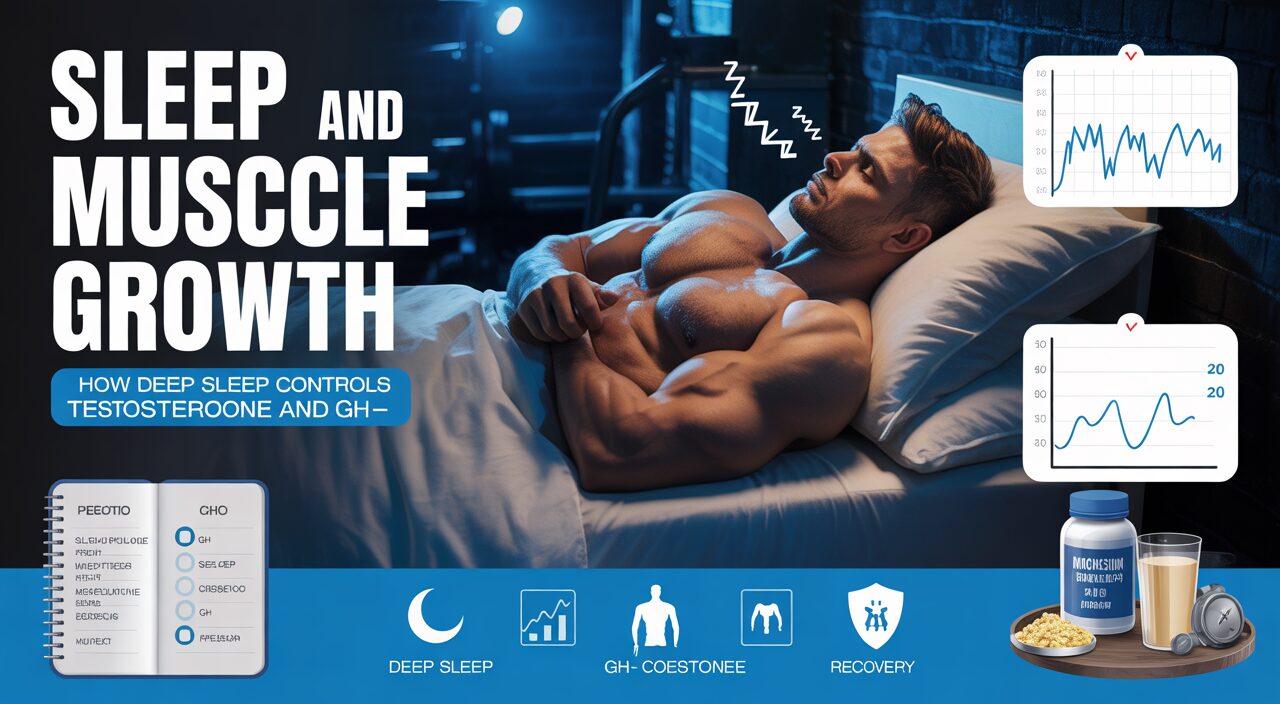
Sleep and Muscle Growth: How Deep Sleep Controls Testosterone, GH Pulses, and Recovery
WHAT YOU’LL LEARN IN THIS GUIDE
- The direct biochemical link between sleep duration, GH pulsatility, and muscle protein synthesis rates
- How sleep deprivation cuts testosterone production and by exactly how much — the data is more alarming than most people expect
- Why deep sleep (slow-wave sleep) is the single most anabolically important sleep stage for bodybuilders
- The optimal sleep duration window for maximum muscle growth based on current research
- Practical sleep optimization strategies that elite athletes and enhanced lifters actually use
- How training timing, nutrition, and compounds interact with sleep quality
- The most common sleep mistakes that are silently costing you muscle and recovery
Sleep and muscle growth operate on the same clock, and most lifters spend years optimizing every variable in the gym while ignoring the 7 to 9 hours where the majority of their actual muscle repair happens. The relationship between sleep and muscle growth is not motivational — it is mechanical. Growth hormone secretion, testosterone production, protein synthesis rates, and cortisol regulation all follow sleep architecture in predictable, measurable ways. Shortchange the sleep and you shortchange every one of those processes simultaneously.
THE SHORT ANSWER
Sleep and muscle growth are directly linked through three primary mechanisms: growth hormone secretion (65 to 70% of daily GH output occurs during slow-wave sleep), testosterone production (which drops up to 15% for every hour of sleep lost below 7 hours), and muscle protein synthesis (which remains elevated for 24 to 48 hours post-training but requires uninterrupted sleep for full completion). For most natural lifters, 7.5 to 9 hours of high-quality sleep per night is the optimal range. For enhanced athletes on anabolic compounds, the demand increases because the accelerated protein synthesis rate requires matching recovery infrastructure.
1. What Happens to Your Hormones During Sleep: A Stage-by-Stage Breakdown
The relationship between sleep and muscle growth starts with understanding that sleep is not a uniform state. A full night of sleep consists of 4 to 6 cycles, each lasting roughly 90 minutes, moving through three stages of non-rapid-eye-movement (NREM) sleep and one stage of REM sleep. Each stage plays a distinct role in hormonal regulation and tissue repair.
NREM Stage 3: Where Growth Hormone Lives
Slow-wave sleep (SWS), also called NREM Stage 3 or deep sleep, is where the vast majority of pulsatile growth hormone release occurs. Research published in the Journal of Sleep Research established that approximately 65 to 70% of total daily GH secretion happens during the first two slow-wave sleep episodes of the night, typically in the first 3 to 4 hours after sleep onset. Miss this window or fragment it, and your GH output for the entire day takes a significant hit.
GH released during slow-wave sleep directly drives insulin-like growth factor 1 (IGF-1) production in the liver, and IGF-1 is one of the primary downstream mediators of muscle protein synthesis. The sequence is: slow-wave sleep triggers GH pulse, GH signals liver to produce IGF-1, IGF-1 binds muscle cell receptors and activates the mTOR pathway, mTOR drives protein synthesis. Disrupting step one disrupts every step that follows.
Second Half of the Night: Testosterone Recovery
Testosterone secretion follows a different but equally important pattern. Unlike GH which spikes early, testosterone production is concentrated in the second half of the night and peaks during the final REM stage just before natural waking. A full night of 7 to 9 hours allows the complete testosterone secretory cycle to run. Truncating sleep to 5 or 6 hours cuts off this cycle before it finishes, reducing morning testosterone values measurably.
WHAT THE RESEARCH SAYS
A landmark 2011 study at the University of Chicago (Leproult and Van Cauter) placed healthy young men on 5 hours of sleep per night for one week. Daytime testosterone levels fell by 10 to 15% — the equivalent of 10 to 15 years of normal aging. The effect was dose-dependent: each additional hour of lost sleep produced measurable further reductions in testosterone output.
REM Sleep and Cortisol Regulation
REM sleep also plays a role in hypothalamic-pituitary-adrenal axis regulation, which controls cortisol output. Poor or inadequate REM sleep increases cortisol levels the following day. Chronically elevated cortisol suppresses testosterone synthesis, upregulates muscle protein breakdown pathways, and impairs the anabolic signaling cascade that post-workout training depends on. Sleep deprivation and elevated cortisol form a feedback loop that progressively worsens muscle recovery over time.
2. The Sleep-Testosterone Connection: What the Numbers Actually Show
The link between sleep and testosterone is one of the most well-documented hormonal relationships in sports medicine. Sleep and muscle growth outcomes are downstream of this connection, because testosterone is the primary driver of nitrogen retention, satellite cell activation, and androgen receptor density in trained muscle tissue.
Here is what the data shows at different sleep durations:
| Nightly Sleep Duration | Testosterone Impact | GH Impact | Cortisol Impact |
|---|---|---|---|
| 9+ hours | Optimal baseline | Full SWS cycles completed | Optimal suppression |
| 7.5 to 9 hours | Optimal range for most men | 2 to 3 full SWS episodes | Normal diurnal pattern maintained |
| 6 to 7 hours | 5 to 10% reduction | Final SWS episode shortened | Mild elevation (+10 to 15%) |
| 5 to 6 hours | 10 to 15% reduction | REM expansion compresses SWS | Moderate elevation (+20 to 30%) |
| Under 5 hours | 15 to 25% reduction | Severe SWS fragmentation | Significant elevation (+30 to 50%) |
The 10 to 15% testosterone reduction from chronic 5-hour sleep might seem modest, but consider the context: that reduction is compounding on a daily basis for anyone who consistently under-sleeps. A natural lifter running at 90% of their testosterone output because of poor sleep is operating in a permanently sub-optimal anabolic environment. The training is there. The nutrition is there. The hormonal environment is not.
GYM APPLICATION
If your training stalls after a period of good progress and nothing in your program or diet has changed, track your sleep duration for one week before adjusting training variables. Chronic mild sleep restriction (6 hours instead of 8) is one of the most common undiagnosed causes of plateau in trained athletes. Adding one hour of sleep per night consistently often produces strength and recovery improvements that no training program change would match.
3. Growth Hormone, Slow-Wave Sleep, and Why the First 4 Hours Are Critical
Growth hormone and sleep have a relationship that many lifters understand in name only. The actual mechanism matters for making practical sleep decisions that support muscle growth.
GH is released in discrete pulses throughout the day, but the largest and most physiologically significant pulse occurs within the first 90 to 120 minutes of falling asleep, during the initial slow-wave sleep episode. The amplitude of this pulse is directly proportional to the depth and completeness of slow-wave sleep achieved. Shallow, fragmented, or delayed sleep produces a smaller, blunted GH pulse.
This matters for sleep and muscle growth because GH does not work directly on muscle tissue. It works indirectly through IGF-1, and IGF-1 drives two specific processes that bodybuilders care about: muscle protein synthesis (anabolism) and lipolysis (fat mobilization). A robust GH pulse before midnight drives a corresponding IGF-1 rise that peaks in the early morning hours, which aligns almost perfectly with the window of elevated muscle protein synthesis following an evening training session.
What Blunts the Nightly GH Pulse
Several factors specifically reduce the amplitude of the initial GH pulse, each of which is controllable:
- High blood glucose at sleep onset: Elevated insulin suppresses GH secretion directly. Consuming high-glycemic carbohydrates within 2 hours of sleep significantly blunts the nightly GH pulse.
- Alcohol: Even moderate alcohol consumption reduces slow-wave sleep duration and compresses or eliminates the initial GH pulse. This is one of the most impactful single-night interventions for GH suppression.
- Elevated cortisol at sleep onset: Cortisol and GH are antagonistic. Late evening stress, blue light exposure, and stimulant use all elevate cortisol and blunt GH secretion.
- Sleep fragmentation: Multiple arousals during the first 3 hours of sleep interrupt the slow-wave stages that trigger GH pulses. Sleep quality matters as much as duration.
For athletes using growth hormone-releasing peptides like the CJC-1295/Ipamorelin stack, understanding this mechanism is particularly relevant. The pre-sleep dosing protocol for these peptides is specifically designed to amplify the endogenous GH pulse that sleep already triggers, not to replace it. A disrupted sleep architecture reduces the efficacy of these peptides because the pituitary response they rely on is sleep-dependent.
4. Muscle Protein Synthesis Rates During Sleep: What Is Actually Being Built
Sleep and muscle growth converge most directly in the behavior of muscle protein synthesis (MPS) during overnight recovery. Post-resistance training MPS elevation remains measurable for 24 to 48 hours, but the rate is not constant throughout that window. Sleep creates a specific anabolic environment that daytime waking hours do not replicate.
Research from Maastricht University (Res et al., 2012) demonstrated that consuming protein immediately before sleep significantly augmented MPS rates overnight compared to fasting. The implication is that the sleeping body is not in an anabolic shutdown state — it is actively synthesizing muscle protein, and that process can be fueled. This finding fundamentally changed how serious bodybuilders approach pre-sleep nutrition.
The rate of overnight MPS is governed by three factors:
- Amino acid availability: Protein consumed before sleep, particularly casein (slow-digesting) or a complete protein source, maintains plasma amino acid levels throughout the night.
- Insulin-like growth factor 1 levels: Driven by the nightly GH pulse, as described above.
- mTORC1 activation status: Training the previous day sensitizes muscle cells to anabolic signals during the recovery window. Sleep is when much of that sensitization is capitalized on.
WHAT THE RESEARCH SAYS
Res et al. (2012, Medicine and Science in Sports and Exercise) showed that 40g of casein protein consumed 30 minutes before sleep increased overnight MPS by 22% compared to a placebo. A follow-up study by the same group in 2015 confirmed that this pre-sleep protein augmentation translated into significantly greater muscle hypertrophy and strength gains over a 12-week training period. The effect was largest in participants who trained in the evening.
5. How Sleep Deprivation Destroys Recovery: The Catabolic Cascade
Sleep and muscle growth are a bidirectional relationship. Adequate sleep builds. Inadequate sleep breaks down. The catabolic cascade that occurs with chronic sleep restriction is specific and measurable.
When sleep falls below 6 hours per night chronically, the following occur simultaneously:
Elevated Cortisol
Cortisol, the catabolic glucocorticoid, follows an inverse relationship with sleep quality. Sleep restriction activates the HPA axis and raises 24-hour cortisol output. Chronically elevated cortisol promotes muscle protein breakdown through upregulation of ubiquitin-proteasome pathway activity — the same cellular mechanism that causes muscle atrophy in immobilized patients. For lifters, this translates to net catabolic pressure that partially offsets the anabolic stimulus from training.
Reduced Insulin Sensitivity
Five days of sleep restriction measurably reduces insulin sensitivity by 11 to 25% (Donga et al., 2010, Journal of Clinical Endocrinology and Metabolism). Lower insulin sensitivity means poorer nutrient partitioning: the carbohydrates consumed post-workout are less efficiently directed toward muscle glycogen replenishment and more toward fat storage. The same calorie surplus that builds muscle on adequate sleep builds proportionally more fat on insufficient sleep.
Impaired Neural Recovery
Neuromuscular efficiency — the capacity of the nervous system to recruit motor units and generate force — declines with sleep deprivation before measurable strength losses appear. Reaction time, peak force production, and work capacity in the 70 to 85% of 1RM range used for hypertrophy training are all compromised. This connects to the neuromuscular efficiency work covered in the exercise science section — that ceiling is being artificially lowered every night you under-recover.
Myostatin Elevation
Preliminary research suggests that acute sleep restriction may increase myostatin expression in skeletal muscle. Myostatin is the protein that acts as the body’s built-in brake on muscle growth — higher myostatin activity means a lower ceiling on hypertrophy. The mechanism is not fully established, but the directional relationship is consistent with what is observed experimentally: sleep-deprived trainees build muscle more slowly even when training volume and nutrition are matched to adequately-rested counterparts.
6. Sleep Duration Recommendations for Bodybuilders: What the Evidence Supports
Generic sleep guidelines (7 to 9 hours for adults) come from public health frameworks that are not optimized for individuals under significant training stress. The sleep requirements for muscle growth in serious athletes are at the upper end of that range and sometimes beyond it.
| Lifter Profile | Recommended Duration | Priority Focus | Notes |
|---|---|---|---|
| Recreational lifter (3x/week) | 7 to 8 hours | Consistency over duration | Regular schedule matters most |
| Serious natural lifter (5x/week) | 8 to 9 hours | SWS quality + duration | Training volume drives demand |
| Enhanced athlete (steroids/SARMs) | 8 to 9+ hours | Sustaining elevated MPS | Accelerated synthesis needs matching recovery |
| Competitive athlete (2x/day sessions) | 9 to 10 hours + nap | Full cycle completion | Naps add SWS minutes if >20 min |
| Cutting phase (caloric deficit) | 8 to 9 hours | Muscle preservation priority | Deficit already catabolic — sleep is protective |
For enhanced athletes specifically, the heightened protein synthesis rates driven by anabolic compounds like SARMs, anabolic steroids, or growth-stimulating peptides create a higher recovery demand. The anabolic environment these compounds create is only productive if the infrastructure to capitalize on it exists — and that infrastructure is primarily sleep. Running a SARM cycle on 5 hours of sleep per night is leaving a significant portion of the compound’s potential on the table.
7. Training Timing and Sleep Quality: When You Train Matters
Training timing directly affects both the quality and the hormonal content of subsequent sleep. Evening training is common among working adults, but the interaction between late exercise and sleep architecture deserves attention for anyone who takes sleep and muscle growth seriously.
High-intensity training within 90 minutes of sleep onset has been shown to delay sleep onset, reduce slow-wave sleep duration in the first cycle, and elevate core body temperature in a way that disrupts the sleep architecture that drives GH secretion. The practical threshold most research identifies is that training completed more than 2 hours before sleep shows no meaningful negative impact on sleep quality in trained individuals.
However, moderate-intensity training in the early evening (5 to 7 PM) is associated with improved sleep quality compared to morning training in several studies, likely because it creates a larger adenosine accumulation and a more pronounced temperature drop at sleep onset. The worst timing for sleep quality is high-intensity training after 9 PM.
GYM APPLICATION
If you must train late (after 8 PM), keep intensity moderate and finish with low-intensity cool-down work to accelerate core temperature drop. Avoid pre-workout stimulants that contain caffeine (half-life 5 to 7 hours) after 3 PM. A warm shower 60 to 90 minutes after late training can accelerate the temperature drop that signals sleep onset.
8. Sleep Optimization Strategies That Actually Work
Sleep and muscle growth outcomes are directly improvable through specific, evidence-backed interventions. These are not generic wellness recommendations. Each has a documented mechanism relevant to the hormonal processes that support muscle growth.
Temperature: The Most Underrated Variable
Core body temperature needs to drop 1 to 2 degrees Fahrenheit from daytime baseline to initiate and maintain sleep. Sleeping in a cool room (65 to 68°F / 18 to 20°C) accelerates this process. Research from the National Institutes of Health shows that cool sleeping environments also measurably increase the amount of time spent in slow-wave sleep per night. For bodybuilders, cooler room temperature is a zero-cost slow-wave sleep enhancer.
Light Management and Melatonin Timing
Blue light exposure in the 2 hours before sleep suppresses melatonin production and delays sleep onset. Melatonin does not directly produce muscle growth, but it is the timing signal that initiates sleep architecture. Delayed melatonin = delayed slow-wave sleep = delayed GH pulse = blunted nightly anabolic response. Blue light blocking glasses or eliminating screen use after 9 PM addresses this at the source.
Pre-Sleep Nutrition Protocol for Maximum Anabolism
Based on the Res et al. research, a pre-sleep protein strategy for muscle growth looks like this:
- 40 to 48g of casein protein (or cottage cheese as a whole-food source) 30 to 45 minutes before sleep
- Avoid high-glycemic carbohydrates within 2 hours of sleep (they blunt the GH pulse)
- A small amount of complex carbohydrates 3 hours before sleep can raise serotonin and accelerate sleep onset without blunting GH
- Magnesium (200 to 400mg elemental magnesium glycinate) has the most consistent evidence for improving sleep quality and slow-wave sleep duration
If you are focused on body recomposition — building muscle and losing fat simultaneously — check the body recomposition guide which covers how sleep interacts with the caloric balance question in practice. The short answer: recomp outcomes are significantly better when sleep is optimized, because the improved insulin sensitivity from adequate sleep improves nutrient partitioning in both directions.
Consistent Sleep and Wake Times
Circadian rhythm consistency is arguably more important than raw sleep duration. A consistent 7.5-hour sleep window with fixed wake time produces better slow-wave sleep quality and higher testosterone output than an irregular 8.5-hour average with variable timing. The body’s testosterone and GH secretory patterns are tied to the circadian clock, and irregular sleep disrupts that clock even when total hours are adequate.
Supplement Interventions with Genuine Evidence
Several supplements have meaningful evidence for improving sleep quality relevant to muscle growth:
| Supplement | Dose | Mechanism | Evidence Quality |
|---|---|---|---|
| Magnesium glycinate | 200 to 400mg elemental | NMDA antagonism, GABA potentiation | Strong — multiple RCTs |
| Zinc | 15 to 30mg | Supports testosterone production during sleep | Moderate — strongest in deficient populations |
| Melatonin | 0.3 to 0.5mg | Circadian timing signal | Strong for onset, not for quality at low doses |
| Ashwagandha KSM-66 | 300 to 600mg | Cortisol reduction (27% in RCTs), improves sleep quality | Strong — multiple double-blind RCTs |
| L-theanine | 200 to 400mg | Alpha wave promotion, anxiety reduction | Moderate — consistent for sleep quality at onset |
| Glycine | 3g | Core temperature drop via vasodilation | Moderate — increases SWS time in RCTs |
9. Sleep on Cycle: Enhanced Athletes and Increased Sleep Demand
Enhanced athletes using anabolic steroids, SARMs, or peptides have a specific relationship with sleep that natural lifters do not. The elevated anabolic state created by these compounds increases muscle protein synthesis rates by 20 to 40% beyond natural levels. That accelerated synthesis requires matching recovery throughput, and the primary bottleneck becomes sleep quality.
Androgens have a complex effect on sleep architecture. Testosterone and its derivatives reduce REM sleep duration while often increasing slow-wave sleep in the early cycle. This means enhanced athletes may notice less vivid dreaming on cycle, which is a normal physiological adaptation, not a problem. The GH-driving effect of improved slow-wave sleep can partially explain why anabolic cycles produce their best results in athletes who prioritize sleep alongside the compound.
One practical concern is that some anabolic compounds can cause sleep disruption through secondary mechanisms:
- MK-677 (Ibutamoren): This GH secretagogue significantly increases REM sleep and slow-wave sleep duration, making it one of the few compounds that actively improves sleep architecture. Many users report notably more vivid dreams and deeper sleep, particularly in the first weeks of use.
- Trenbolone acetate: The acetate ester’s short half-life and androgenic potency are commonly associated with night sweats and sleep fragmentation. This is partly responsible for the cognitive and mood side effects attributed to Tren.
- High-dose testosterone: Sleep apnea risk increases with testosterone supplementation, particularly in individuals with existing risk factors. Undiagnosed sleep apnea while using anabolic compounds severely impairs the hormonal and recovery benefits those compounds are intended to provide.
For athletes on peptide protocols targeting GH optimization — including muscle growth peptides — pre-sleep dosing timing is designed specifically to align with the endogenous GH pulse window during the first slow-wave sleep episode. Fragmented or delayed sleep reduces the efficacy of these protocols by the same mechanism it reduces natural GH output.
10. Common Sleep Mistakes Bodybuilders Make
| Mistake | Why It Hurts | What to Do Instead |
|---|---|---|
| Pre-workout caffeine after 3 PM | 5 to 7 hour half-life delays sleep onset and reduces SWS time | Use caffeine before 1 PM; use non-stimulant pre-workout alternatives for evening training |
| High-carb meal right before bed | Insulin spike blunts GH pulse during slow-wave sleep | Last carb meal 2+ hours before sleep; pre-sleep meal is protein-dominant |
| Alcohol “to relax and sleep” | Fragments sleep architecture in second half of night; severely blunts GH pulse | Avoid alcohol within 4 hours of sleep; the sedative effect is not restful sleep |
| Irregular sleep schedule on weekends | “Social jet lag” disrupts circadian testosterone and GH secretion pattern for days | Limit weekend sleep schedule variance to +/- 1 hour from weekday schedule |
| Phone/screen use in bed | Blue light suppresses melatonin; psychological stimulation delays sleep onset | No screens for 30 minutes minimum before sleep; use blue light blocking if necessary |
| Skipping pre-sleep protein | 8 hours of fasting during active MPS window wastes recovery opportunity | 40g casein or whole protein source 30 to 45 minutes before sleep |
| Hot bedroom temperature | Elevated core temperature prevents SWS entry and GH pulse initiation | Keep room at 65 to 68°F (18 to 20°C); use breathable bedding |
11. Practical Sleep Protocol for Muscle Growth: The Complete Template
Pulling everything above into a usable framework for sleep and muscle growth optimization:
Daytime:
- Last caffeine dose before 1 PM (adjust based on your caffeine sensitivity)
- Expose yourself to bright natural light within 30 minutes of waking — anchors the circadian clock
- Training session ideally completed by 7 PM; hard cutoff at 9 PM for high intensity work
Evening (3 hours before sleep):
- Final carbohydrate-heavy meal at this point — complex carbs only
- Begin dimming lights and reducing blue light exposure from screens
- Magnesium glycinate 200 to 400mg can be taken here with dinner
30 to 45 minutes before sleep:
- 40g casein protein or protein-rich pre-sleep meal (cottage cheese, Greek yogurt, chicken)
- Glycine 3g if using for SWS enhancement
- L-theanine 200 to 400mg if anxiety or racing thoughts are an issue
- Melatonin 0.3 to 0.5mg only if sleep timing needs shifting (not for nightly use)
- Room temperature set to 65 to 68°F
- No screens; low light environment
Sleep target: 7.5 to 9 hours at consistent times
If this is not achievable on weeknights, a 20 to 30 minute nap in the early afternoon adds slow-wave sleep minutes without disrupting nighttime sleep onset. Naps longer than 30 minutes begin entering slow-wave sleep and will fragment nighttime sleep if taken after 3 PM.
The protein, training volume, and compound investments you make in bodybuilding nutrition are only fully expressed through adequate sleep. Optimize both sides of the equation.
Article Summary
- Sleep and muscle growth are linked through three primary mechanisms: GH secretion (65 to 70% occurs during slow-wave sleep), testosterone production (drops 10 to 15% per hour below 7 hours of sleep), and muscle protein synthesis (active overnight but requires uninterrupted sleep to complete)
- Slow-wave sleep in the first 3 to 4 hours of the night is the most anabolically critical sleep stage — this is when the largest GH pulse occurs
- One week of 5-hour nights reduces daytime testosterone by 10 to 15% in young healthy men — equivalent to 10 to 15 years of normal aging (Leproult and Van Cauter, 2011)
- Pre-sleep protein (40g casein) increases overnight MPS by approximately 22% and produces measurably greater hypertrophy over 12-week training programs
- Optimal sleep duration: 7.5 to 9 hours for natural lifters; 8 to 9+ hours for enhanced athletes due to accelerated MPS rates
- The largest single-variable GH blunter is alcohol — even moderate consumption severely fragments sleep architecture and eliminates the nightly GH pulse
- Cool room temperature (65 to 68°F), consistent sleep/wake times, and eliminating high-glycemic carbohydrates before bed are the three highest-leverage sleep optimization variables
- Enhanced athletes on anabolic compounds have higher sleep demand because the elevated MPS rate requires matching recovery infrastructure — running anabolic cycles on 5 to 6 hours of sleep wastes a significant portion of the compound’s anabolic potential
- MK-677 (Ibutamoren) is the one compound that actively improves sleep architecture by increasing both slow-wave sleep and REM duration
- Cortisol and GH are antagonistic — anything that raises cortisol at sleep onset (stress, stimulants, blue light) directly blunts the nightly GH pulse
Frequently Asked Questions
How much sleep do I need to build muscle?
For natural lifters training 4 to 5 days per week, 7.5 to 9 hours is the evidence-supported optimal range. Sleep and muscle growth outcomes degrade measurably below 7 hours. Enhanced athletes and those doing two-a-day sessions often benefit from 9 to 10 hours plus a strategic afternoon nap. The minimum below which muscle growth is significantly impaired in the research literature is consistently around 6 hours per night on a chronic basis.
Does sleep directly affect testosterone levels?
Yes — the relationship between sleep and testosterone is direct and well-documented. Testosterone production is concentrated in the second half of the night during REM sleep stages. Research from the University of Chicago shows that one week of 5-hour nights reduces daytime testosterone by 10 to 15% in healthy young men. Chronic mild sleep restriction (6 hours instead of 8) produces ongoing but smaller testosterone reductions that compound over time.
Is it worth taking anything to improve sleep quality for muscle growth?
Several supplements have meaningful evidence: magnesium glycinate (200 to 400mg) has the most consistent research for improving sleep quality and slow-wave sleep duration. Glycine (3g) reduces core temperature and has been shown to increase slow-wave sleep time in clinical trials. Ashwagandha KSM-66 (300 to 600mg) reduces cortisol by approximately 27% in RCTs, which indirectly improves sleep quality and reduces the catabolic environment during sleep. Melatonin at low doses (0.3 to 0.5mg) helps with sleep timing but does not improve sleep quality at higher doses.
What is the best time to train to optimize sleep quality?
The optimal training time for both performance and sleep quality is the early-to-mid evening, approximately 5 to 7 PM. This captures peak neuromuscular function and evening testosterone elevation while leaving adequate time for core temperature to drop before sleep onset. High-intensity training after 9 PM consistently shows negative effects on sleep architecture in research. If you must train late, keep intensity moderate and avoid stimulant pre-workouts entirely.
Can napping replace lost nighttime sleep for muscle growth?
Napping can partially offset acute sleep debt but does not fully replicate nighttime slow-wave sleep for hormone production purposes. A 20 to 30 minute nap increases alertness and adds slow-wave sleep minutes, but the GH pulses associated with naps are smaller in amplitude than the primary nighttime pulse. For athletes who consistently cannot achieve 8 hours at night, a consistent afternoon nap (before 3 PM, 20 to 30 minutes) meaningfully improves recovery outcomes compared to no nap. It is a supplement to adequate nighttime sleep, not a replacement.
Does sleep quality matter as much as sleep duration for muscle growth?
Both matter, but quality and duration interact. Nine hours of fragmented, alcohol-disrupted sleep is measurably worse for GH output and testosterone production than 7.5 hours of uninterrupted, high-quality slow-wave sleep. The research on sleep and muscle growth consistently shows that slow-wave sleep completeness is the most important single factor for anabolic hormone production — which means sleep quality (avoiding fragmentation) may be more controllable and impactful than simply spending more hours in bed with poor architecture.
Should I eat protein before bed to build more muscle during sleep?
Yes — the evidence for pre-sleep protein augmenting overnight muscle protein synthesis is strong. Res et al. (2012) showed 40g of casein protein 30 minutes before sleep increased overnight MPS by 22% and produced greater hypertrophy over a 12-week study. Casein is preferred because its slow digestion maintains plasma amino acid levels throughout the night. Whole food equivalents like cottage cheese (rich in casein) or Greek yogurt work well as practical alternatives.
Disclaimer: This article is for informational and educational purposes only. It is not medical advice. The compounds and protocols discussed may carry serious health risks. Always consult a qualified healthcare provider before starting any new supplement, peptide, hormone, or training protocol. FitScience does not encourage or endorse the use of any illegal substances.
Related Reading on FitScience
- Neuromuscular Efficiency: The Overlooked Factor in Strength Gains
- Do 90-Minute Workouts Hurt Muscle Growth? What the Cortisol Data Actually Says
- Can You Build Muscle and Lose Fat at the Same Time? The Body Recomp Guide
- Creatine for Maximum Muscle Growth: Dosage, Timing, and New Research
- Top Peptides for Muscle Growth: Real Results Backed by Science