- Why GLP-1 drugs like Ozempic and Tirzepatide cause significant muscle loss and how much to expect
- The science behind how SARMs counteract GLP-1 muscle wasting at the receptor level
- Which SARMs are most studied and most practical for GLP-1 muscle preservation
- Dosing strategies, cycle lengths, and timing for using SARMs alongside GLP-1 therapy
- What the emerging 2025 research says about SARMs as a lean mass preserving intervention for GLP-1 users
- How to combine SARMs with resistance training and nutrition for maximum muscle retention on Ozempic
- The risks, contraindications, and monitoring required when layering SARMs with GLP-1 medications
SARMs for GLP-1 muscle loss is one of the fastest-growing questions in performance-oriented medicine right now. GLP-1 receptor agonists like semaglutide (Ozempic, Wegovy) and tirzepatide (Mounjaro, Zepbound) produce dramatic weight loss, but clinical data consistently shows that 25–40% of that lost weight is lean muscle mass, not fat. For bodybuilders, athletes, and physique-conscious users, this is not an acceptable trade. A 2025 literature review published in Pharmacological Reviews identified SARMs and antimyostatin agents as the most targeted pharmacological intervention for preventing GLP-1-induced lean body mass loss, and the bodybuilding community is paying close attention.
SARMs for GLP-1 muscle loss work by binding selectively to androgen receptors in muscle tissue, directly elevating muscle protein synthesis at the cellular level regardless of the caloric deficit or appetite suppression created by the GLP-1 drug. Ostarine (MK-2866) is currently the most studied SARM for lean mass preservation in caloric-deficit conditions, making it the most practical choice for GLP-1 users. RAD-140 and LGD-4033 offer stronger anabolic drives for users who want to build muscle while losing fat on GLP-1 therapy.
1. The GLP-1 Muscle Loss Problem: How Bad Is It?
GLP-1 receptor agonists work primarily by suppressing appetite and slowing gastric emptying, creating a consistent caloric deficit. The weight loss they produce is real and clinically significant: semaglutide trials show 10–15% total body weight reduction over 68 weeks, while tirzepatide trials show up to 22% total body weight reduction.
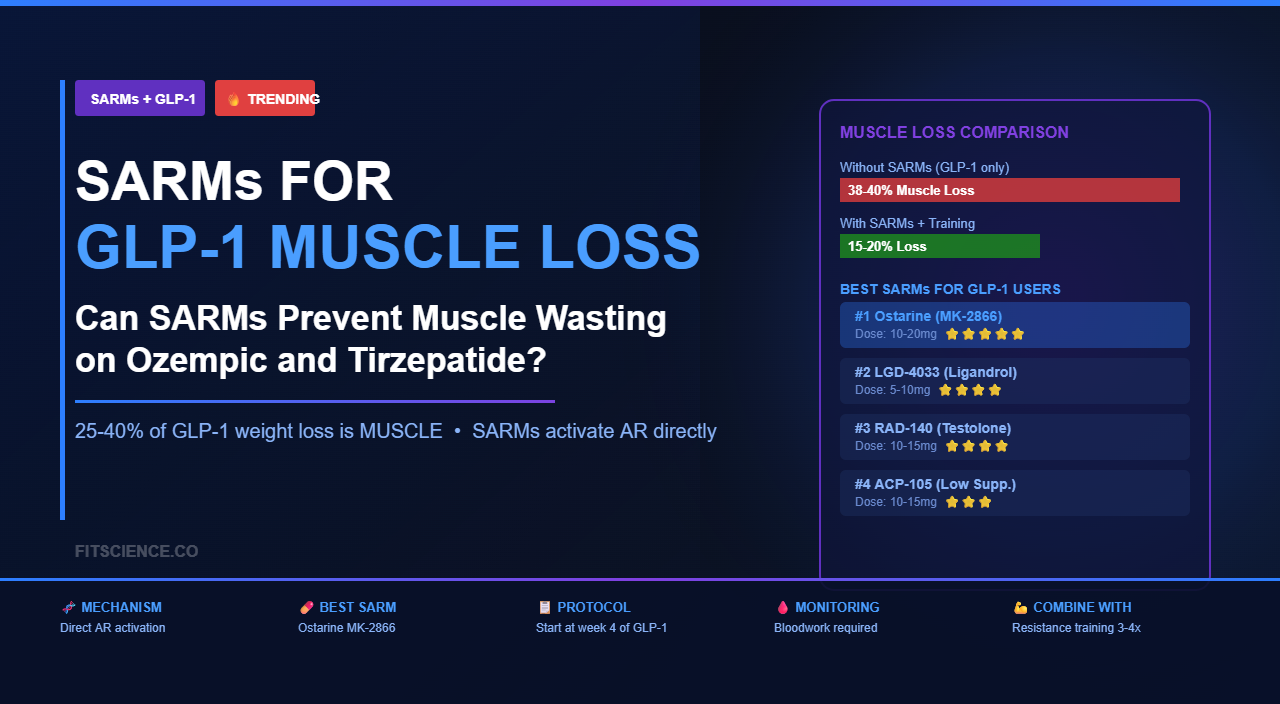
The problem is what gets lost along with the fat. In the landmark STEP 1 trial for semaglutide, DEXA scans showed that approximately 38–40% of total weight lost was lean body mass, primarily skeletal muscle. Tirzepatide data from SURMOUNT-1 shows a similar ratio. For a 220-pound bodybuilder who loses 30 pounds on Ozempic, approximately 11–12 pounds of that loss is muscle.
A 2025 literature review titled “The Potential of SARMs and Antimyostatin Agents in Addressing Lean Body Mass Loss From GLP-1 Agonists” (PMC12311314) identified SARMs, particularly Ostarine (MK-2866) and Enobosarm, as having “demonstrated clinically meaningful preservation of lean body mass during caloric restriction states.” The review concluded that SARMs represent the most targeted pharmacological intervention for GLP-1-associated lean mass loss because they directly stimulate androgen receptors in muscle tissue independently of systemic hormonal status or caloric availability.
2. Why GLP-1 Drugs Cause Muscle Loss: The Mechanism
- Appetite suppression reduces protein intake: Most GLP-1 users naturally eat less protein on the drugs because their appetite is suppressed across all macronutrients.
- Inactivity from nausea: GLP-1 side effects including nausea, vomiting, and fatigue reduce physical activity, removing the resistance training signal that protects muscle during caloric restriction.
- Glucocorticoid activity during caloric deficit: Prolonged caloric restriction elevates cortisol, which has direct catabolic effects on muscle tissue.
- Reduced insulin signaling: GLP-1 agonists alter insulin dynamics in ways that can blunt insulin-mediated anabolic signaling in muscle cells.
SARMs short-circuit this muscle loss mechanism at its source. By binding to androgen receptors in skeletal muscle, SARMs directly upregulate muscle protein synthesis without requiring adequate caloric intake, elevated insulin, or normal hormone levels.
3. Which SARMs Work Best for GLP-1 Muscle Preservation?
| SARM | Muscle Preservation Strength | Suppression Level | Clinical Data? | Typical Dose for GLP-1 Users | Cycle Length | Suitability |
|---|---|---|---|---|---|---|
| Ostarine (MK-2866) | Moderate | Low (at 10–15mg) | Yes (Phase II trials) | 10–20mg/day | 8–12 weeks | Excellent — first choice |
| LGD-4033 (Ligandrol) | High | Moderate | Yes (Phase I trials) | 5–10mg/day | 8–10 weeks | Good — for lifters wanting muscle gain alongside fat loss |
| RAD-140 (Testolone) | Very High | Moderate to High | Limited human data | 10–15mg/day | 8 weeks | Moderate — strong drive but more suppression |
| ACP-105 | Moderate | Very Low | Preclinical only | 10–15mg/day | 8–12 weeks | Good — low suppression for sensitive users |
| S23 | Very High | High | Preclinical only | 10–20mg/day | 6–8 weeks | Poor — high suppression risk in catabolic state |
Ostarine (MK-2866) as First Choice: Ostarine has completed Phase II clinical trials where it was tested specifically for muscle preservation in cancer cachexia, showing statistically significant lean mass retention in caloric deficit states. At 10–20mg daily, testosterone suppression is manageable and bloodwork monitoring is straightforward.
LGD-4033 for Active Bodybuilders: For lifters who want to use GLP-1 therapy for fat loss while continuing to build muscle simultaneously, LGD-4033 at 5–10mg provides a stronger anabolic signal that can support genuine muscle gain even in a caloric deficit.
4. How to Stack SARMs With GLP-1 Therapy: The Practical Protocol
Phase 1: GLP-1 Stabilization (Weeks 1–4): Start your GLP-1 medication at its lowest dose and titrate as prescribed. Do not add SARMs during this phase. Allow your body to adjust to the appetite suppression and GI side effects. Use this phase to optimize protein intake and establish a consistent resistance training routine.
Phase 2: SARMs Introduction (Weeks 5–16): Once stable on GLP-1 therapy, introduce your chosen SARM. Start Ostarine at 10mg/day for the first 2 weeks before moving to 15–20mg if tolerating well. Take bloodwork baseline at this point.
Phase 3: PCT and Evaluation (Weeks 17–20): After a 12-week SARMs run, complete the appropriate PCT protocol. Continue GLP-1 therapy through PCT if still in active fat loss phase.
The single most important non-pharmacological intervention for GLP-1 muscle preservation is resistance training 3–4 times per week. SARMs for GLP-1 muscle loss are significantly more effective when paired with consistent resistance training because they amplify the training stimulus in muscle cells. SARMs without training on GLP-1 therapy is like providing kindling without a spark.
5. Dosing, Timing, and Cycle Structure for SARMs on GLP-1
| User Type | Goal | Recommended SARM | Dose | Cycle Length | PCT Required? | Bloodwork Timing |
|---|---|---|---|---|---|---|
| Recreational user, first time | Preserve existing muscle on Ozempic | Ostarine (MK-2866) | 10–15mg/day | 8–10 weeks | Optional (mild suppression) | Before cycle, at week 8 |
| Intermediate bodybuilder | Maintain muscle, continue progressing | Ostarine + LGD-4033 | 15mg + 5mg/day | 10–12 weeks | Yes (Enclomiphene or Nolvadex) | Before cycle, at week 6, at PCT end |
| Advanced bodybuilder | Build muscle while on GLP-1 fat loss | RAD-140 or LGD-4033 | 10–15mg/day | 8–10 weeks | Yes (full PCT) | Before cycle, at week 4, at PCT end |
| Women | Preserve muscle tone on Ozempic/Tirzepatide | Ostarine | 5–10mg/day | 8–10 weeks | No PCT needed at these doses | Before cycle, at week 8 |
6. What the Research Says About SARMs and GLP-1 Muscle Loss
A 2024 analysis in Obesity Reviews examined body composition outcomes across all major GLP-1 agonist trials and found that structured resistance training alone reduced lean mass loss from approximately 38% of total weight lost to approximately 22%. This suggests resistance training alone provides partial but incomplete protection, and that the combination of SARMs plus resistance training has a theoretical ceiling significantly above either intervention alone.
The honest scientific assessment: direct human trials testing SARMs specifically in GLP-1 users do not yet exist as of April 2026. The evidence is extrapolated from SARMs trials in cachexia states that mimic GLP-1 catabolism, general evidence for SARMs in caloric restriction models, and mechanistic logic about androgen receptor activation during caloric deficit. This is meaningful but not definitive.
7. Nutrition Protocol for Maximum Muscle Retention on GLP-1 Plus SARMs
- Protein: 1.0–1.2g per pound of bodyweight daily, non-negotiable. Liquid protein sources like casein shakes, Greek yogurt, and cottage cheese are easier to consume without triggering GLP-1-related nausea. See our protein intake guide.
- Calories: Target 500–800 calorie deficit. Aggressive deficits of 1,000+ calories per day combined with GLP-1 appetite suppression accelerate muscle catabolism beyond what SARMs can compensate for.
- EAA supplementation: Essential amino acids at 10–15g between meals provide a direct MPS stimulus without caloric load.
- Creatine: 5g daily. Creatine has a meaningful lean mass preservation effect during caloric restriction and directly supports strength retention.
GLP-1 medications significantly slow gastric emptying, which means supplement absorption timing works differently than normal. Take creatine and protein supplements at least 30–60 minutes after a GLP-1 injection. Spread supplement intake across 4–5 smaller doses per day rather than 2–3 large doses.
8. Bloodwork and Monitoring for SARMs on GLP-1 Therapy
| Marker | Why Monitor | Frequency | Action Threshold |
|---|---|---|---|
| Total Testosterone | SARMs suppress natural production; GLP-1 can also affect testosterone in men | Baseline, week 6, post-PCT | Below 300 ng/dL requires PCT adjustment |
| LH and FSH | Confirms degree of HPTA suppression from SARMs | Baseline, week 6, post-PCT | Suppressed LH/FSH requires extended PCT |
| Liver enzymes (ALT, AST) | Some SARMs are hepatotoxic; GLP-1 drugs also have hepatic activity | Baseline, week 4, end of cycle | 3x upper limit of normal: discontinue SARM |
| Lipid panel (HDL/LDL) | SARMs reduce HDL; GLP-1 drugs have mixed lipid effects | Baseline, end of cycle | HDL below 35 mg/dL: reduce SARM dose or discontinue |
| HbA1c and fasting glucose | GLP-1 drugs affect blood glucose; SARMs have mild insulin sensitivity effects | Baseline, every 8 weeks | Outside your GLP-1 prescriber’s targets: report to prescriber |
| Complete blood count (CBC) | SARMs can raise hematocrit; monitor for polycythemia | Baseline, end of cycle | Hematocrit above 52%: discontinue or reduce SARM dose |
9. SARMs vs Other Muscle Preservation Strategies for GLP-1 Users
| Strategy | Effectiveness | Accessibility | Monitoring Required |
|---|---|---|---|
| High-protein diet (1.0–1.4g/lb) | Moderate | High (no prescription) | Minimal |
| Resistance training (3–4x/week) | Moderate-High | High (no prescription) | Minimal |
| Creatine monohydrate | Low-Moderate | High (OTC) | None |
| SARMs (Ostarine) | Moderate-High | Moderate (grey market) | Bloodwork required |
| SARMs (LGD-4033 or RAD-140) | High | Moderate (grey market) | Full bloodwork panel required |
| Testosterone/TRT | Very High | Low (prescription only) | Comprehensive bloodwork |
10. Common Mistakes When Using SARMs for GLP-1 Muscle Loss
| Mistake | Why It Hurts | What to Do Instead |
|---|---|---|
| Adding SARMs in week 1 of GLP-1 therapy | GI side effects are worst early; impossible to attribute adverse effects correctly | Wait 4 weeks on GLP-1 before introducing SARMs |
| Not hitting protein targets due to appetite suppression | SARMs amplify MPS but cannot synthesize protein from nothing | Use liquid protein sources, EAAs between meals, track protein deliberately |
| Using SARMs without resistance training | SARMs amplify the training signal; without training, there is no anabolic drive to amplify | Commit to 3 resistance training sessions per week minimum before starting SARMs |
| Skipping bloodwork to avoid hassle | Unmonitored suppression in the catabolic GLP-1 environment can cause long-term HPTA damage | Get baseline bloodwork before starting; mid-cycle check at week 6 |
| Hiding SARM use from GLP-1 prescriber | Prescriber cannot interpret abnormal bloodwork correctly without full information | Inform your prescriber for safe and accurate monitoring |
| Using high-suppression SARMs (YK-11, S23) on GLP-1 | In a severely catabolic state, high-suppression SARMs create disproportionate hormonal disruption | Stick to lower-suppression SARMs like Ostarine or ACP-105 for GLP-1 protocols |
Key Takeaways: SARMs for GLP-1 Muscle Loss
- GLP-1 drugs like semaglutide and tirzepatide cause 25–40% of total weight lost to come from lean muscle mass
- SARMs for GLP-1 muscle loss work by directly activating androgen receptors in muscle tissue, elevating MPS independently of the catabolic environment
- Ostarine (MK-2866) at 10–20mg/day is the best first-choice SARM for GLP-1 users due to low suppression and available clinical data
- LGD-4033 and RAD-140 provide stronger anabolic drives for advanced athletes wanting to build muscle while losing fat on GLP-1 therapy
- A 2025 PMC literature review specifically identified SARMs as the most targeted pharmacological intervention for GLP-1-induced lean mass loss
- Always wait 4 weeks on GLP-1 before adding SARMs; allow GI side effects to stabilize first
- Protein intake of 1.0–1.2g per pound of bodyweight daily is essential for SARMs to have substrate to work with
- Bloodwork before, during, and after the SARMs cycle is non-negotiable when layering with GLP-1 therapy
- Resistance training 3–4x per week provides the training signal that SARMs amplify
- Disclose SARM use to your GLP-1 prescriber for safe and accurate monitoring
Frequently Asked Questions
Can SARMs fully prevent muscle loss on Ozempic?
SARMs for GLP-1 muscle loss significantly reduce lean mass loss but are unlikely to completely eliminate it in an aggressive caloric deficit. Clinical Ostarine data shows muscle preservation of 1.5–3.3 lbs over 12 weeks vs placebo, meaning you might retain 70–85% of your muscle instead of 60–75%. Stronger SARMs like LGD-4033 or RAD-140 can push preservation higher, particularly when combined with resistance training and adequate protein intake.
Is it safe to use SARMs while on Ozempic or Tirzepatide?
No direct drug-drug interaction studies between SARMs and GLP-1 receptor agonists exist as of 2026. Mechanistically, there is no known dangerous pharmacokinetic interaction since they work through entirely separate receptor systems. The primary safety concerns are cumulative hormonal strain. Bloodwork monitoring and prescriber disclosure manage this risk appropriately.
Which SARM is best for preserving muscle on Ozempic for women?
Ostarine at 5–10mg daily is the recommended starting point for women using SARMs on GLP-1 therapy. Women are significantly more sensitive to SARMs than men, meaning lower doses produce meaningful anabolic effects with minimal androgenic side effects. Ostarine at these doses does not require PCT for most women.
How long should I run SARMs on a GLP-1 protocol?
An 8–12 week SARM cycle starting 4 weeks after beginning GLP-1 therapy is the recommended structure. Complete the appropriate PCT after the SARM cycle, then continue GLP-1 therapy through PCT if still in active fat loss phase.
Will SARMs interfere with the weight loss effects of Ozempic?
SARMs should not meaningfully interfere with GLP-1-driven fat loss. They work through entirely separate receptor pathways. SARMs may cause some water retention early in a cycle that masks fat loss on the scale temporarily, but actual fat loss continues. Track progress using DEXA scans or body measurements rather than scale weight alone.
Do I need a PCT after running SARMs on GLP-1 therapy?
PCT depends on the SARM and dose used. Ostarine at 10–15mg for 8–10 weeks may not require PCT, though Enclomiphene or Nolvadex is a reasonable precaution in the catabolic context of GLP-1 therapy. LGD-4033 and RAD-140 at standard doses require PCT. Get bloodwork at the end of your cycle to assess actual suppression before deciding.
Disclaimer: This article is for informational and educational purposes only. It is not medical advice. The compounds and protocols discussed may carry serious health risks. Always consult a qualified healthcare provider before starting any new supplement, peptide, hormone, or training protocol. FitScience does not encourage or endorse the use of any illegal substances.