More Than Just Leg Day
In the realm of strength and conditioning, few movements are as revered and as misunderstood as the squat. It is the undisputed king of lower-body exercises. This is a fundamental human movement pattern that transcends the gym floor. From sitting in a chair to picking up a toddler, the squat mechanic is woven into daily life.
However, performing a squat under load requires more than just bending your knees and standing back up. It is a complex, multi-joint orchestration of levers, pulleys, and force production.
For the athlete and the exercise enthusiast alike, understanding the why behind the how is crucial. This guide goes beyond basic cues. We will dive into the exercise science and biomechanics of the squat to help you optimize performance, mitigate injury risk, and build functional, lasting strength.
The Foundation: The Setup and the “Tripod”
Before any movement occurs, stability must be established. A biomechanically sound squat begins where you connect with the ground.
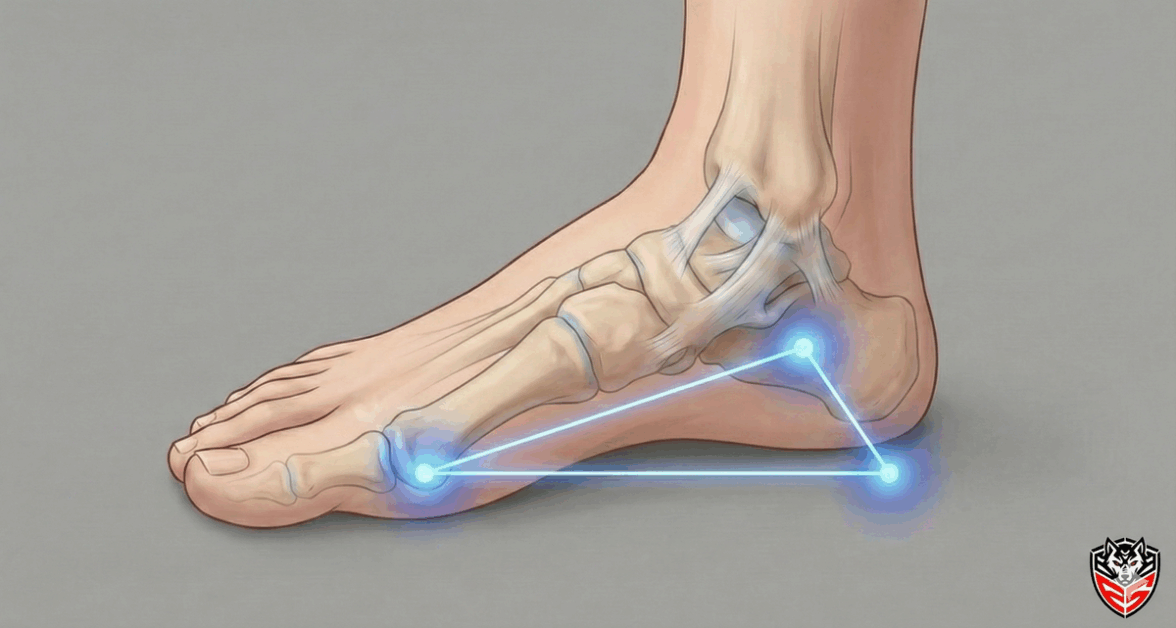
We often hear “drive through your heels,” but this is an oversimplification that can lead to backward imbalance. A more accurate biomechanical cue is the “tripod foot.”
Imagine three points of contact on the bottom of your foot:
- The base of the big toe (first metatarsal joint).
- The base of the little toe (fifth metatarsal joint).
- The heel (calcaneus).
By actively rooting these three points into the floor, you create a stable arch. This “foot rooting” sends tension up the kinetic chain. It stabilizes the ankle and signals the glutes to engage before the descent even begins.
The Role of Intra-Abdominal Pressure (IAP)
The spine needs protection during a loaded squat. This is not achieved merely by “sucking in your abs.” It is achieved through bracing to create Intra-Abdominal Pressure (IAP). Think of your torso as a soda can. If it is empty and unbraced, it crushes easily under weight. If it is pressurized and braced, it can support significant loads. This pressure braces the lumbar spine from the inside out, providing a rigid structure for the legs to push against.
The Kinetic Chain: Joint Actions and Muscle Activation
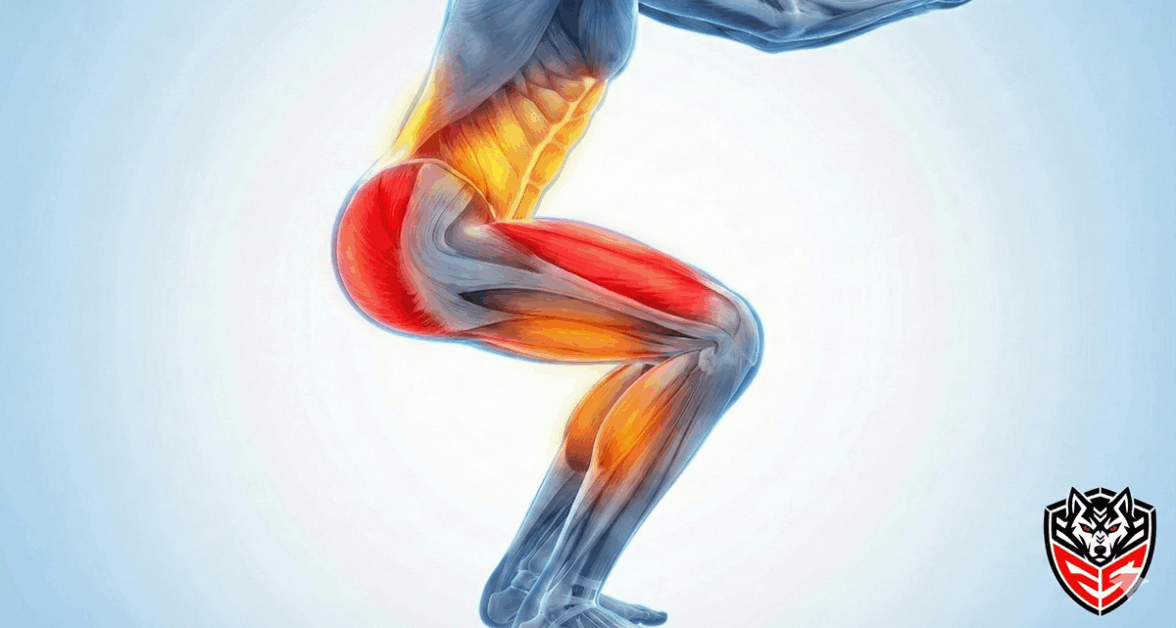
The squat is a “closed kinetic chain” compound movement. This means your feet are fixed to the floor while your body moves. This requires simultaneous and coordinated actions across three major joints: the hip, knee, and ankle.
1. The Hip Joint (The Engine)
The hip is a ball-and-socket joint designed for immense power.
- Primary Movers: Gluteus maximus (the powerhouse of extension), adductor magnus (inner thigh, a major hip extensor in deep flexion), and the hamstrings.
- The Hamstring Paradox: Contrary to popular belief, the hamstrings are not primary movers in the squat. Because they cross both the hip and knee, they lengthen at the hip but shorten at the knee as you squat down. This results in little net change in length. Their primary role in the squat is isometric stabilization to help control the pelvis and counteract shear forces on the knee joint.
2. The Knee Joint (The Hinge)
The knee is primarily a hinge joint, though some rotation occurs.
- Primary Movers: The Quadriceps femoris group (rectus femoris, vastus lateralis, vastus medialis, vastus intermedius). These are the primary extensors of the knee responsible for standing you back up.
3. The Ankle Joint (The Foundation)
The oft-neglected hero of squat depth.
- Primary Action: Dorsiflexion (shin moving toward the toes).
- Muscles: Gastrocnemius and soleus (calves) act eccentrically to control descent and stabilize the knee.
- Biomechanical Note: Limited ankle dorsiflexion is the number one barrier to hitting proper depth without compromising spinal position. If the ankle won’t bend, the body compensates by folding at the waist or rounding the lower back.
Deconstructing the Movement Phases
Phase 1: The Eccentric (Descent)
This phase is about controlled tension. Gravity wants to pull you down, so your muscles must fight it.
As you unlock your hips and knees simultaneously, you enter “triple flexion” (hips flex, knees flex, ankles dorsiflex). The key here is maintaining the center of gravity over the midfoot.
- The quadriceps lengthen under tension to control knee bend.
- The glutes lengthen to control hip flexion.
- The ankle dorsiflexors allow the knee to track forward over the toes. (Note: Knees traveling past toes is perfectly safe and necessary for most people to maintain an upright torso, provided the heels remain flat).
Phase 2: The Amortization Phase (The Hole)
This is the transition point at the bottom of the squat between going down and coming up. Biomechanically, this is where the stretch-shortening cycle is primed. Your muscles are like stretched rubber bands. They store elastic energy that can be utilized for the ascent. A brief, stable pause here is far superior to bouncing off your joints.
Phase 3: The Concentric (Ascent)
The drive phase. This is “triple extension.”
- You drive through the tripod foot.
- The quadriceps contract forcefully to extend the knees.
- Simultaneously, the glutes contract violently to extend the hips, thrusting them forward.
Crucial Biomechanical Point: The hips and shoulders should rise at the same rate initially. If the hips shoot up first, the torso pitches forward. This shifts the load entirely onto the lower back and turns the squat into a “good morning” exercise.
Individual Variation: Why Your Squat Looks Different
This is where exercise science moves away from rigid dogma. There is no single “perfect” squat aesthetic because human skeletons vary wildly.
- Femur Length: An individual with long femurs relative to their torso will naturally need to lean their torso farther forward to keep their center of gravity balanced over their feet. Someone with short femurs will be able to squat much more upright. Both are correct for their anatomy.
- Hip Socket Anatomy: The depth and angle of the acetabulum (hip socket) dictate ultimate squat depth. Some people’s bone structure allows them to squat “ass-to-grass” effortlessly. Others will experience bone-on-bone impingement just past parallel. Forcing depth beyond your anatomical capability is a recipe for hip labral tears and lumbar issues.
Troubleshooting Common Biomechanical Deviations
Understanding “perfect” mechanics helps us identify potentially harmful ones.
1. Knee Valgus (Knees Caving In)
- The Issue: During the ascent, the knees collapse inward toward the midline.
- The Biomechanics: This places immense stress on the MCL (medial collateral ligament) and ACL. It usually stems from weak hip abductors (glute medius) or poor ankle mobility forcing compensation.
- The Fix: Strengthen the glute medius with banded exercises. Cue “spread the floor apart with your feet” during the ascent.
2. The “Butt Wink” (Posterior Pelvic Tilt)
- The Issue: At the bottom of the squat, the pelvis tucks under, causing the lumbar spine to round (flex).
- The Biomechanics: While minor tucking might be acceptable unloaded, under load, this places shear force on the lumbar discs. It is often blamed on tight hamstrings, but more frequently, it is an issue of hitting anatomical hip depth limits or a lack of core bracing strategy.
- The Fix: Improve ankle mobility to allow depth without spinal compensation. Learn to brace effectively. Stop the squat depth just before the pelvis begins to tuck.
Mastering the squat is a journey rather than a destination. By viewing it through the lens of biomechanics and respecting joint actions, muscle roles, and individual anatomical differences, you move beyond mindless reps. You move toward sustainable, powerful, and injury-free movement. Respect the complexity of the lift, build your foundation, and let science guide your strength.